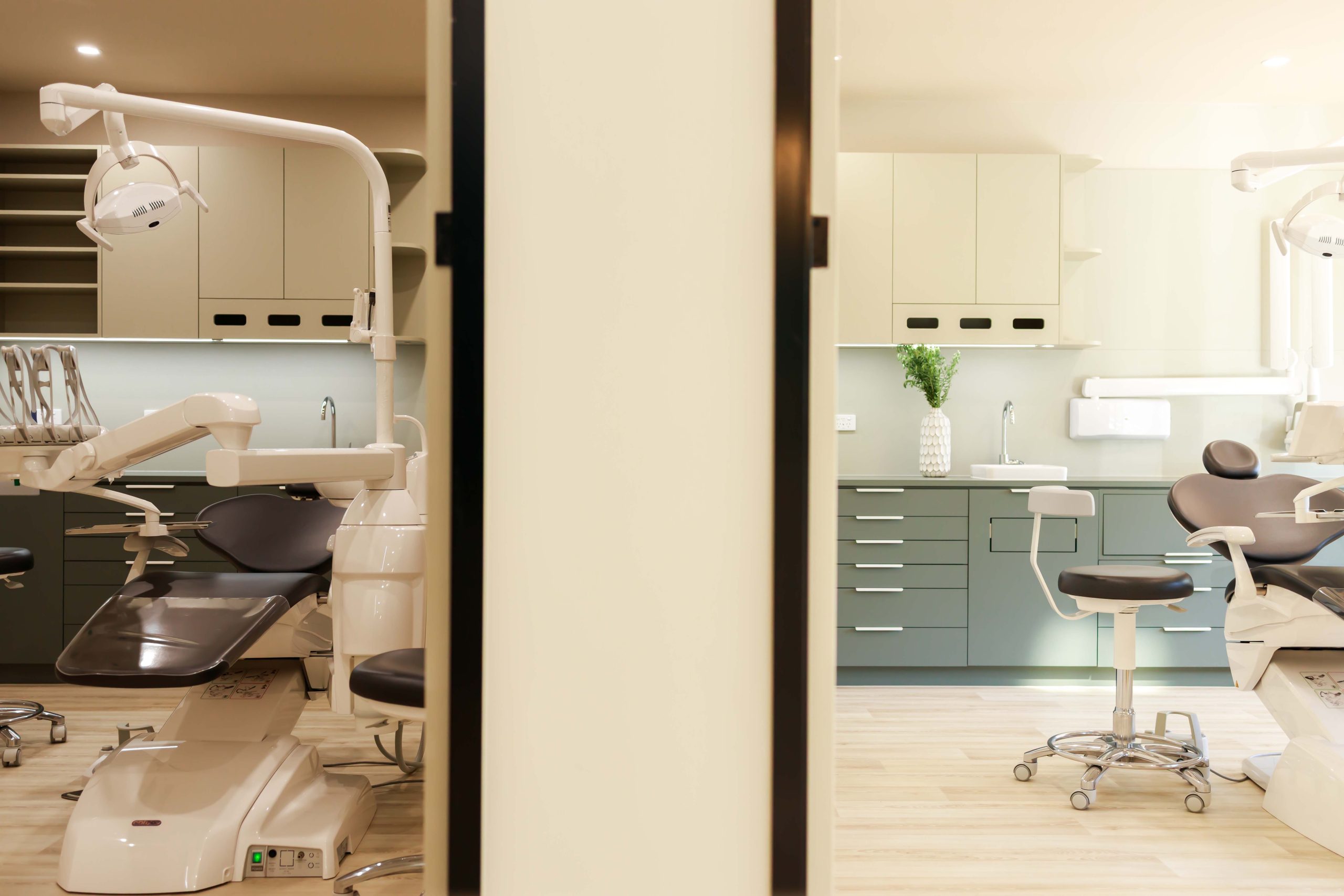
Growth sounds straightforward when it is discussed at a high level. Add another chair. Add another room. Expand the team. Increase capacity. In dental clinics, the reality is usually more complicated.
The first fitout creates habits, circulation patterns and room relationships that people start relying on quickly. If those foundations are not planned with some flexibility, growth often becomes expensive in the wrong way. The clinic does not only spend money adding space. It spends money undoing decisions that made sense for stage one but created dead ends later.
That is why staged thinking matters from the beginning.
Decide What Truly Needs to Be Permanent in Stage One
Not every part of the first fitout needs to be treated the same way. Some elements need to be stable from day one because changing them later is disruptive. Others can remain more flexible while the practice proves demand.
The useful question is not “what can we postpone at all costs?” It is “what would be painful to relocate once the clinic is operating?”
Core circulation logic, reception position, major joinery decisions and the relationship between patient-facing and support spaces often deserve early certainty. If those moves are wrong, expansion becomes awkward because the whole clinic has to work around them.
Flexibility Works Best When It Is Intentional
Some teams talk about future-proofing in a vague way and end up paying for space that does not yet have a job. That can be wasteful. The opposite mistake is building so tightly around current demand that every growth step becomes a mini-refit.
The middle ground is intentional flexibility. That might mean leaving one room able to change use more easily later. It might mean planning joinery or services zones so future adjustments are more straightforward. It might mean making sure additional support functions can be added without breaking the patient journey.
Flexibility is most useful when it is specific, not abstract.
Protect the Logic of the Patient Journey as Capacity Increases
Growth often pressures practices to focus only on throughput. More chairs, more staff and more appointments can seem like the obvious goal. But if expansion makes arrival, waiting, explanation or checkout feel more chaotic, the clinic may gain capacity while losing some of the calm and trust that helped it grow in the first place.
That is why expansion decisions should still be tested against patient experience. Will more movement create new congestion at reception? Will room changes force awkward backtracking? Will the support layer keep up, or will visible clutter rise because the clinic outgrew its storage and set-down points?
The strongest growth plans add capacity without asking the patient-facing side of the practice to absorb the strain.
Support Spaces Usually Become the Constraint First
When practices think about growth, they often picture another chair or room. In reality, support functions frequently become the pressure point first. Storage, staff coordination space, clean set-down areas and other back-of-house needs start carrying more weight as appointment volume rises.
If those spaces were under-planned in stage one, growth quickly feels messy even when the visible front-of-house still looks attractive.
That is why staged planning should include the operational layer, not only the extra treatment capacity. Otherwise the clinic risks expanding the visible offer without giving staff the support they need to deliver it calmly.
Avoid Expansion That Breaks the Original Plan
The costliest growth moves are often the ones that fight the original layout. An added room blocks circulation. A new function lands in the wrong place and creates repeated crossing movement. A front-of-house that once felt composed becomes too tight for the new patient load.
Those problems are hard to solve elegantly once the clinic is busy.
Planning for growth does not mean guessing every future detail perfectly. It means giving the first fitout enough structural logic that the next step can happen without the whole clinic feeling compromised.
Growth Should Feel Like an Extension, Not an Apology
Patients can sense when a clinic has outgrown itself. Staff can feel it even sooner. Rooms become harder to reset, circulation tightens and the practice starts making workarounds instead of decisions.
The goal of staged dental planning is to avoid that point where expansion becomes an apology for earlier shortcuts. A better approach is to decide what needs confidence now, what can remain flexible and which support functions must scale alongside chair capacity.
When stage one is planned with that discipline, the practice has a better chance of growing in a way that still feels calm, organised and trustworthy. That is the version of growth worth aiming for.