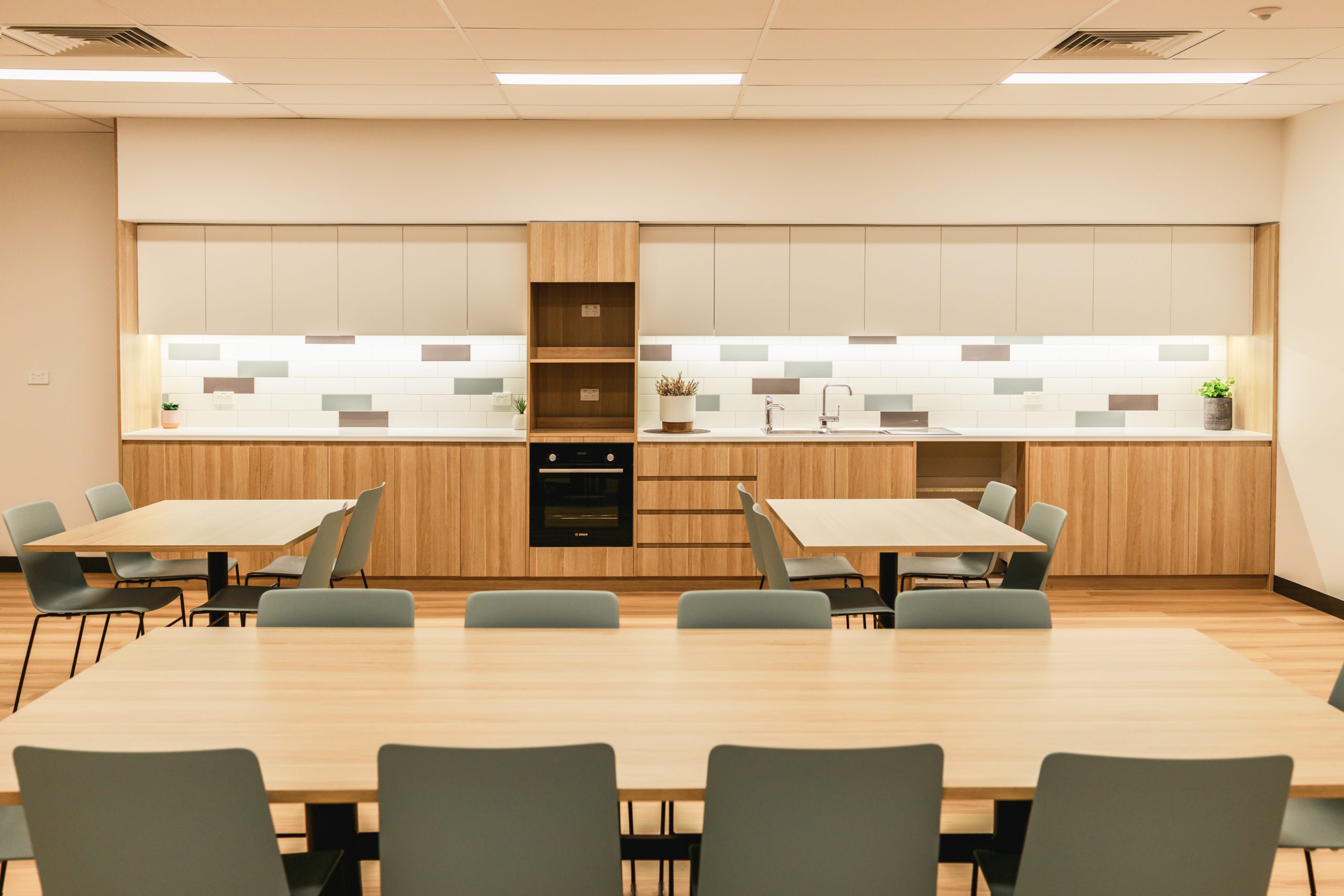
Flexibility is one of the most repeated words in healthcare design right now.
That is not surprising. Clinics are trying to protect themselves against change. Teams expand. Service mixes evolve. Consulting rooms may need to support different practitioners over time. Support spaces often need to work harder than they once did. Owners want rooms that can adapt without triggering a major refit every time the brief shifts.
So the trend toward more flexible rooms makes sense.
But like many popular design ideas, it can become vague very quickly. If “flexibility” only means leaving everything as generic as possible, the result is usually disappointing. The clinic may be easy to change on paper, but less calm, less clear and less efficient in daily use.
The better version of this trend is more disciplined. It asks how a room can stay adaptable while still feeling purpose-built.
Flexibility Should Support Change, Not Avoid Decisions
One of the easiest traps in clinic planning is using flexibility as a reason to postpone important choices.
If a room might serve different uses later, the temptation is to keep the plan as loose and undefined as possible. In reality, that often creates compromise instead of freedom. Storage ends up too shallow. Services land in awkward places. The room works adequately for several uses but strongly for none of them.
That is why useful flexibility starts with a clearer question: what kinds of change are actually likely?
The answers might include:
- different practitioners using the same room across the week
- a consult room supporting small procedure or treatment functions later
- support spaces needing to absorb extra admin or clinical prep tasks
- storage requirements shifting as the practice grows
Once the likely changes are understood, the room can be planned with more intelligence instead of more vagueness.
Adaptable Rooms Still Need a Clear Base Logic
The best flexible rooms do not feel unfinished. They feel composed.
That usually comes from a clear base logic around circulation, storage, lighting, joinery and clinical usability. The room knows what kind of healthcare space it is, even if some details can adapt over time.
For example, a consult room may be planned with:
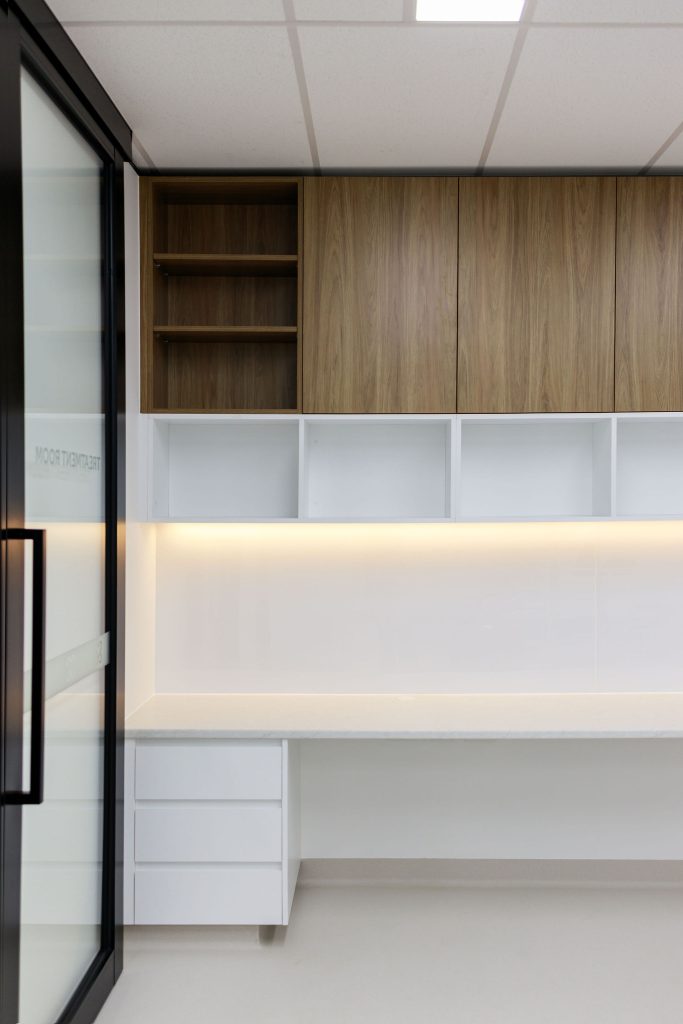
- stronger integrated storage rather than loose furniture
- joinery that can support different equipment setups later
- a clear patient/practitioner relationship within the room
- enough working wall space to avoid clutter pressure
- service planning that allows controlled future change
These choices help the room stay adaptable without losing its identity.

Generic Commercial Flexibility Is Not the Same as Clinical Flexibility
This is where healthcare-specific thinking matters.
A generic office room can often survive on looser assumptions because the emotional and operational stakes are different. In a clinic, the room still needs to support privacy, dignity, infection-aware thinking where relevant, practitioner workflow and patient confidence.
That means healthcare flexibility should never become visual emptiness. Patients should not walk into a space that feels temporary or undecided. Practitioners should not inherit rooms that need daily workarounds because too much was left open.
The best flexible healthcare rooms still read as intentional. That is part of what builds trust.
Support Rooms Are Often Where Flexibility Matters Most
The flexible-room trend is not only about consult rooms.
Support rooms, prep areas, small multi-use spaces, staff touchdown zones and back-of-house storage points often benefit even more from thoughtful adaptability. These are the rooms that quietly absorb operational change as the clinic grows.
If they are too rigid, the clinic runs out of room to move. If they are too generic, they become inefficient catch-all zones that create clutter and confusion.
A stronger approach is to decide what each support room should be able to absorb over time. That may involve:
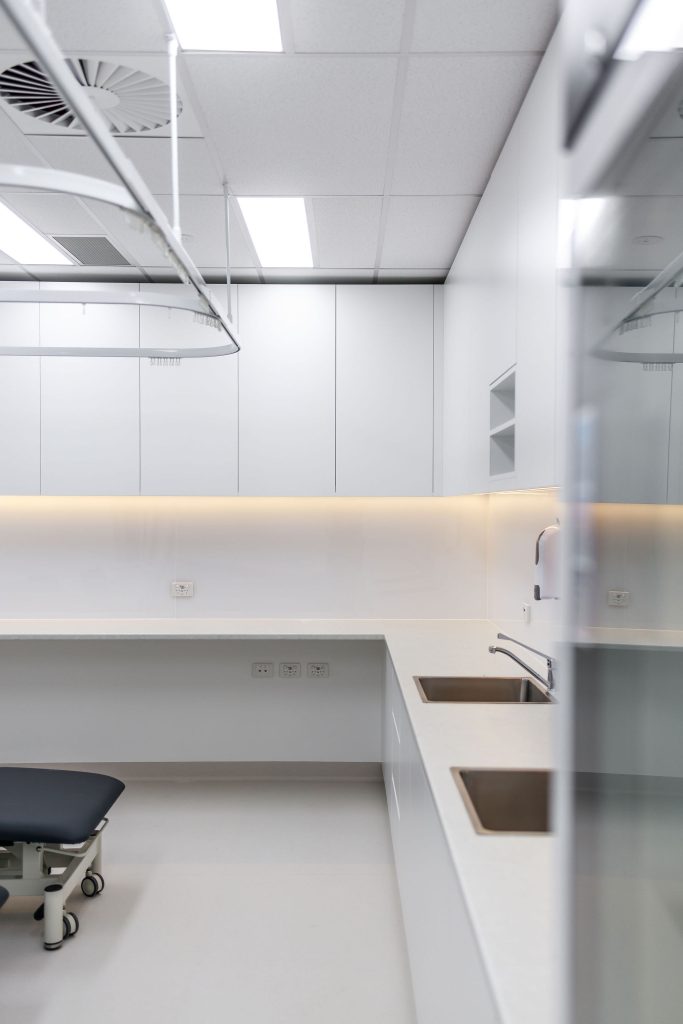
- joinery with controlled spare capacity
- benching or storage that can support a broader task mix later
- a better relationship between consult rooms and support tasks
- room proportions that allow short-term adaptation without awkward overflow
This is flexibility in service of workflow, not flexibility as a slogan.
Storage Is One of the Strongest Flexibility Tools
When people imagine flexible design, they often think about walls or room use first. In many clinics, storage is the more practical lever.
Well-planned storage reduces how much clutter spills into the visible room. It gives teams a better chance to adapt without degrading the experience. It also helps rooms stay visually calm even when the practice is changing around them.
That is one reason integrated joinery continues to matter so much in healthcare fitouts. It is not only an aesthetic decision. It is an adaptability decision.
If the clinic wants rooms that can work harder over time without becoming messy, storage strategy needs to be part of the flexibility conversation from the start.
Flexible Does Not Mean Featureless
This is an important distinction.
Some of the strongest healthcare rooms feel calm and restrained, but they still have character. They still guide movement clearly. They still support the practitioner’s working day. They still help patients feel that they are in a thoughtful clinical environment rather than a generic box with medical furniture inside it.
That balance is what makes this trend worth keeping. It recognises that clinics need room to evolve while protecting the trust-building quality of the space itself.
Brief Questions Worth Asking Early
For teams interested in this trend, a few early questions can keep flexibility practical:
| What kinds of change are realistic in the next three to five years? |
| Which rooms need the most adaptability, and which should stay more fixed? |
| How can joinery and storage carry more of the change load? |
| What service decisions should allow future adjustment without making the room feel unresolved today? |
| Where would “generic flexibility” quietly damage workflow or patient confidence? |
Those questions tend to produce better rooms than a broad instruction to “keep it flexible.”
Good Flexibility Helps a Clinic Grow Without Losing Its Identity
That is the real value of the trend.
Clinics need room to change. But they also need rooms that still feel designed for care, not just waiting for a future decision. When flexibility is handled well, the clinic becomes easier to adapt without losing clarity, calm or professionalism. At SoulMED, that is the more useful version of the trend. Adaptability should protect the working day, not water down the space.