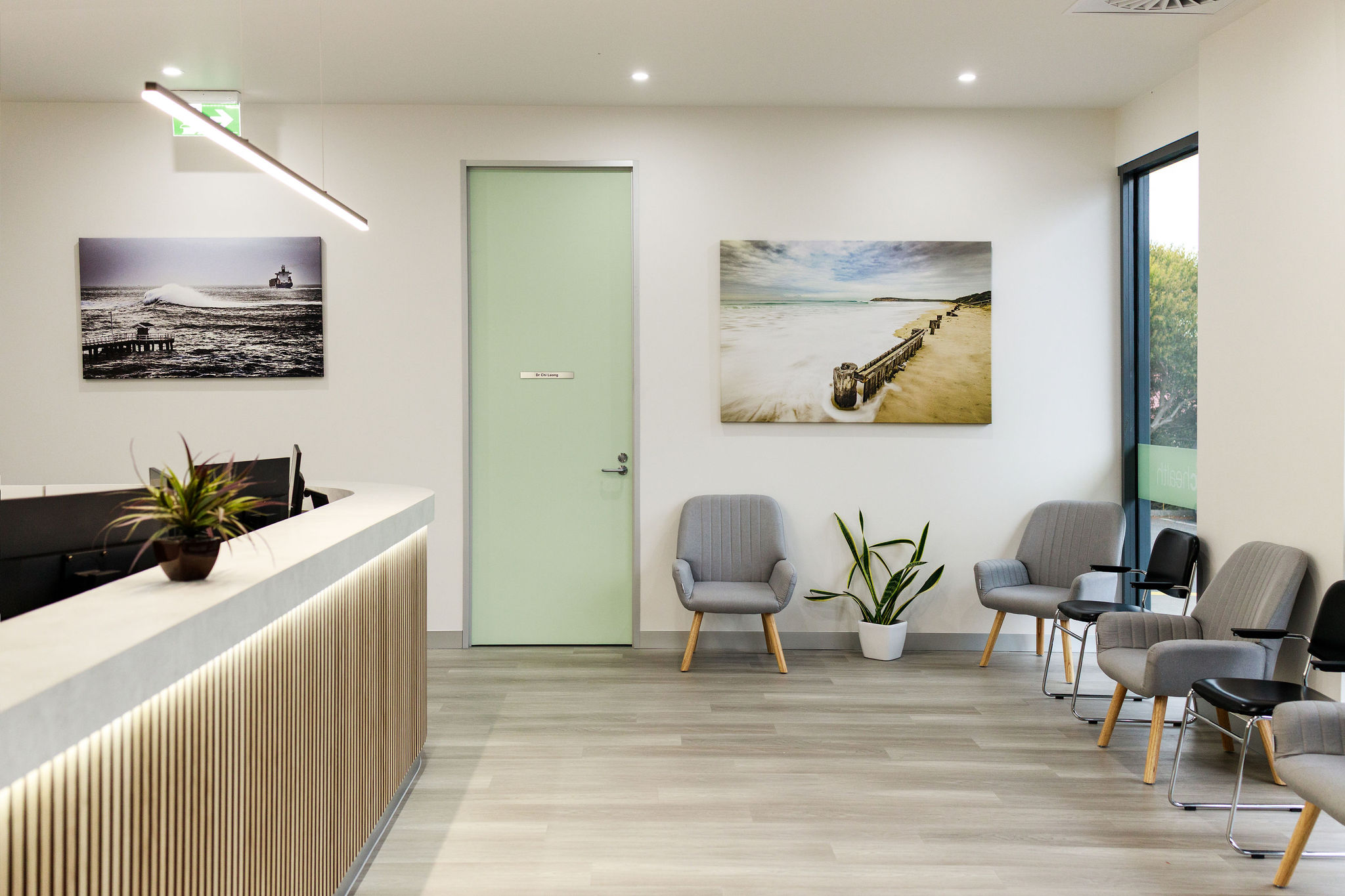
When people talk about healthcare design trends, the conversation often drifts toward the most visible ideas first.
New technology. Stronger sustainability language. Softer styling. More hospitality references. Better lighting. Cleaner joinery.
Those topics matter. But one of the most useful trends showing up across healthcare fitouts is less dramatic and far more practical: the move toward calmer arrival sequences.
This is not just about making a clinic look nice when someone opens the front door. It is about what happens in the first few minutes of the visit. Where patients pause. What they can hear. Whether they understand where to go next. How exposed they feel while checking in. Whether the clinic reads as organised and reassuring or slightly tense and improvised.
That first layer of experience shapes trust much earlier than many fitout briefs acknowledge.
The Arrival Sequence Is Part of Care
In many clinics, the emotional tone of the appointment is set before the practitioner says hello.
Patients arrive carrying context with them. Some are in pain. Some are anxious. Some are visiting for a sensitive issue. Some are bringing a child, supporting a family member or trying to manage paperwork and timing at the same time. In those first minutes, the clinic begins teaching them what kind of place it is.
If the front door opens straight into confusion, queue pressure or overheard conversations, the space can feel more stressful than it needs to. If the first sequence feels legible and calm, the clinic starts building trust immediately.
That is why calmer arrival planning is becoming more valuable. It supports the care experience before the clinical interaction begins.
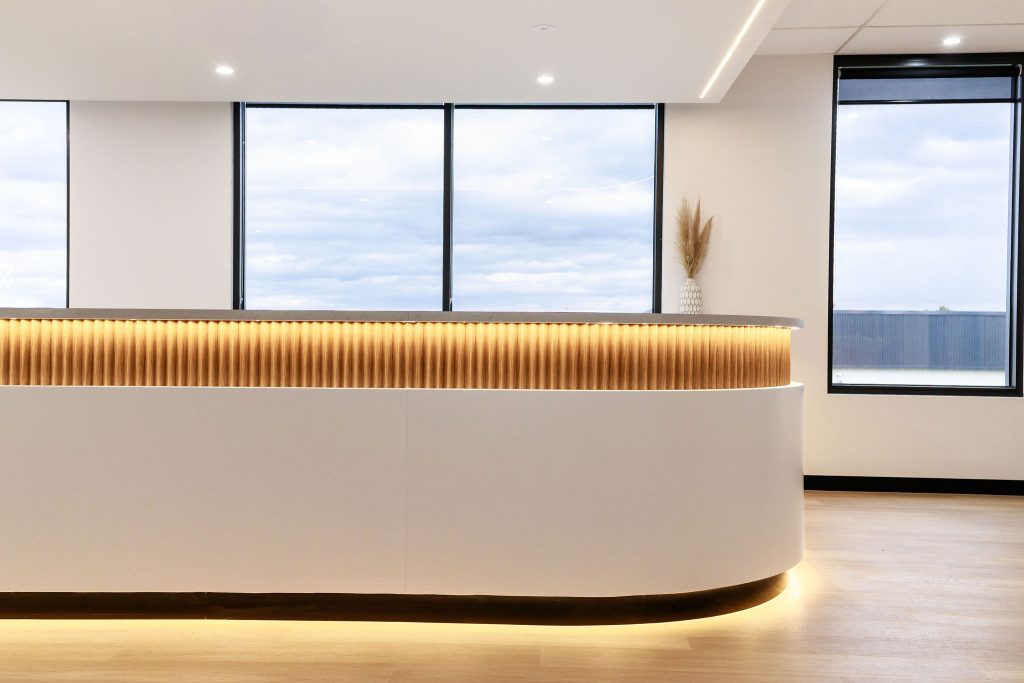
Calm on Arrival Is Not a Styling Trick
One reason this trend is useful is that it can be misunderstood.
Some people hear “calm arrival” and assume it means adding softer finishes or more decorative cues to the reception zone. In reality, the operational layer matters more than styling.
A calmer arrival sequence usually comes from practical decisions such as:
- clearer movement from entry to reception
- enough breathing room between the front door, the queue and seated waiting areas
- better reception privacy and acoustic buffering
- wayfinding that reduces hesitation instead of creating it
- waiting layouts that do not turn the desk into a public stage
These are not superficial upgrades. They directly affect whether patients feel oriented and respected.
Reception Pressure Is One of the Biggest Hidden Friction Points
In many clinics, the front desk carries more emotional and operational pressure than the layout really supports.
Check-in, payment, appointment clarification, forms, names, symptoms and practical questions can all happen in the same small zone while people are seated only a few steps away. Staff then end up trying to solve a layout problem through tone of voice and personal skill.
That is why the arrival-sequence trend matters. It pushes design teams to ask a more useful question: what would make the front-of-house work more calmly before staff are forced to compensate for it?
That may involve better spacing, softer thresholds, clearer queue logic, or more thoughtful relationships between desk, door and waiting. The exact solution changes by project. The principle does not.
Waiting Areas Are Becoming More Intentional
Another sign of this trend is the way waiting rooms are being reconsidered.
For a long time, waiting spaces were often treated as a capacity exercise. How many seats fit? How close can they sit to reception? Is there enough room to pass through? Those questions still matter, but they are no longer enough on their own.
A calmer arrival trend asks for more:
- does the room help people settle quickly?
- does it avoid making every front-desk interaction feel publicly observed?
- does it support mobility, family use and quieter pauses?
- does it read as orderly without becoming cold?
This is where healthcare-specific design differs from generic commercial thinking. A clinic waiting area is not simply a hold space. It is part of the emotional infrastructure of care.
Clear Wayfinding Reduces More Stress Than Most Teams Realise
People often underestimate how much tension comes from not knowing what happens next.
If patients hesitate at the door, turn the wrong way, block circulation while orienting themselves or need repeated verbal direction to reach the right room, the clinic starts to feel less composed. Staff feel it too. They end up spending more time redirecting movement that the space could have resolved more quietly on its own.
This is another reason calmer arrival design is becoming more useful as a trend. Better wayfinding does not need to be loud. Often, the most effective cues are spatial rather than graphic. A clearer line of travel, a pause point before reception, a better relationship between seating and circulation, or a softer edge into the consult spine can all reduce friction.
That kind of clarity benefits everyone.
The Trend Works Because It Supports Trust and Workflow Together
The best design trends are not just visually current. They improve the real working day.
Calmer arrival sequences help patients feel less exposed and more certain. They help staff manage front-of-house tasks with less avoidable pressure. They help practitioners inherit patients who are slightly more settled by the time the consultation starts. They also make the whole clinic feel more deliberate, which supports trust at a brand level.
That is why this trend has staying power. It is not dependent on a style cycle. It is rooted in a better understanding of how healthcare spaces are actually experienced.
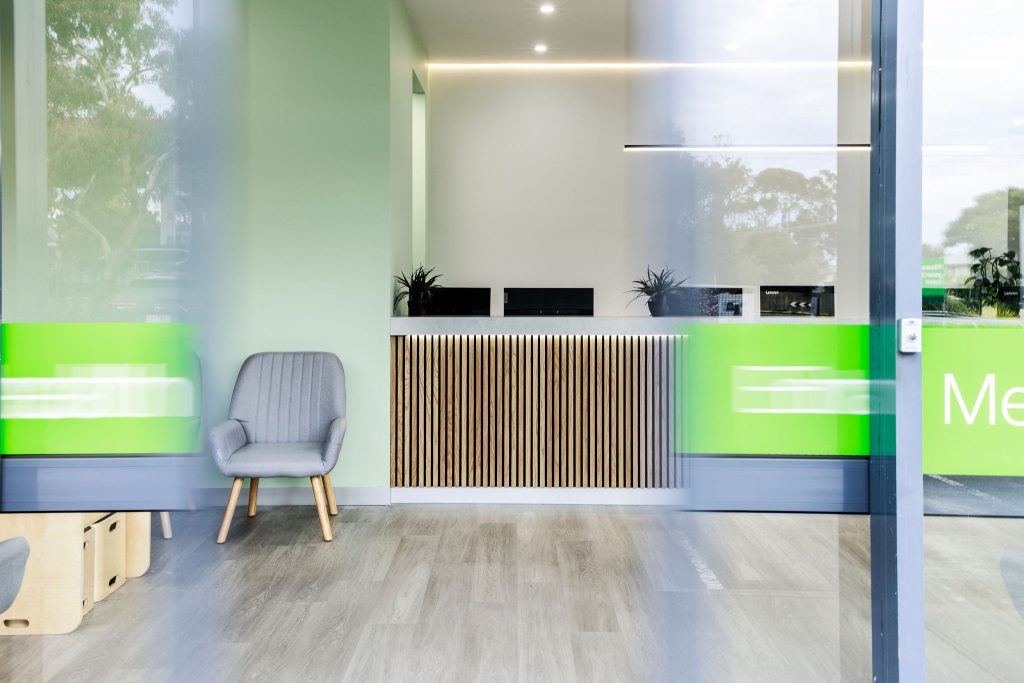
Practical Questions for the Brief
If a clinic owner or developer wants to use this trend well, a few brief questions are worth asking early:
- what does the patient see, hear and do in the first sixty seconds?
- where are privacy pressure points at reception?
- does the waiting layout create calm or audience pressure?
- what small spatial cues reduce hesitation without more signage?
- does the arrival sequence support the clinic’s emotional tone as well as its throughput?
Those questions turn the trend into a practical design lens instead of a vague aspiration.
A Useful Trend Is One That Improves Monday Morning
That is the real test.
A healthcare design trend is only worth keeping if it improves the ordinary working day: Monday morning arrivals, a busy reception period, an anxious patient, a full waiting room, a practitioner running on time, and a support team trying to keep the front-of-house calm.
Calmer arrival sequences are becoming more useful because they do exactly that. They are not only attractive. They are operationally kind.
At SoulMED, that is the kind of trend worth paying attention to. Every detail matters, especially the ones that make care feel steadier before the consultation even begins.