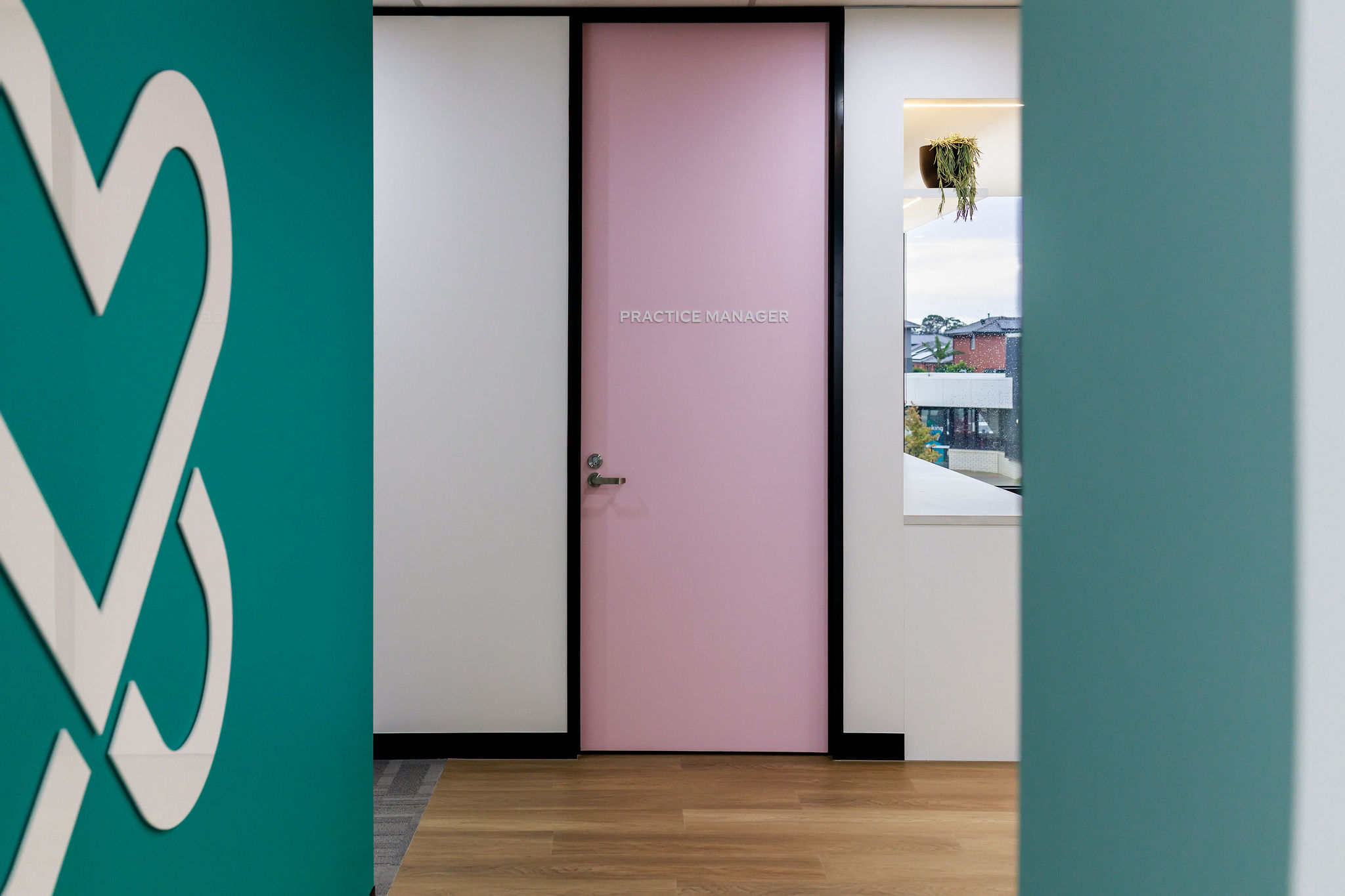
When people think about privacy in a GP clinic, they usually imagine the consult room.
But many privacy breaches, or at least many privacy worries, begin much earlier than that. They begin at the desk.
This is where patients give their name, explain why they are there, update their details, discuss payments, ask for forms, clarify test results or answer questions they may already feel uncomfortable saying in public. In a busy clinic, those moments can happen only a few steps away from a full waiting room.
That is why reception design deserves more attention than it usually gets.
General-practice front desks are asked to do several jobs at once. They need to be welcoming, efficient and easy to find. They need to support staff throughput, appointment management and day-to-day patient questions. But they also need to protect privacy without making the clinic feel defensive or closed down. That balance is more delicate than it sounds.
Privacy Problems Often Come From Proximity, Not Intent
Most front-desk privacy issues are not caused by poor staff conduct. They are caused by the building asking people to do sensitive work in the wrong acoustic conditions.
If the reception counter sits directly against the waiting area, staff may have no realistic way to take details discreetly when the room is busy. If the queue forms through the middle of the seating zone, each new arrival becomes part of the sound pressure around the desk. If patients waiting nearby are positioned too close to the counter, even routine conversations can feel exposed.
That is why privacy at reception should be treated as a layout and sound-management issue, not simply a training issue.
The Goal Is Not Silence. It Is Controlled Disclosure
A GP clinic does not need its reception area to feel silent. It needs it to feel controlled.
People should be able to check in, ask questions and complete practical tasks without feeling that every detail is being broadcast to the room. That can come from several small decisions working together: some physical separation between desk and seating, clearer queue positions, better orientation for the waiting area, and subtle visual screening that reduces the sense of being on display.
The best front-of-house environments manage this without becoming hostile. They do not make patients feel like they are approaching a barrier. They create enough acoustic and visual buffering that the interaction feels orderly rather than public.
Waiting-Room Layout Changes What Reception Sounds Like
The waiting zone plays a larger role in privacy than many clinics realise.
If the first row of seats sits too close to the desk, patients are effectively listening range for every arrival and payment conversation. If seating faces the counter directly, the desk becomes the visual centre of the room, which can amplify the feeling that everyone is witnessing each interaction. If circulation pushes arriving patients to stop beside seated patients while they orient themselves, the room feels noisier and more exposed.
In contrast, a waiting room with better spacing, more considered orientation and a calmer path to the desk helps disperse both sound and attention. Privacy is not only about decibels. It is also about how the space makes people feel while they are speaking.
Screening Can Help When It Is Purposeful
Subtle screening is often useful in GP front-of-house design because it lets the clinic separate functions without closing the space off completely.
The important point is that screening should do a job. It should help break direct sightlines, soften the sense of exposure and create a calmer edge between the counter and the waiting zone. It should not be added only as a decorative feature with no real operational logic behind it.
The Truganina Healthplus Medical Centre public project material is a useful example of this kind of thinking. We used batten screens to create visual separation between reception and waiting while keeping the space cohesive and welcoming. This was a design move with both practical and emotional value.
Registration, Payments and Questions All Need Slightly Different Conditions
Front-desk design also benefits from recognising that not every conversation is the same.
A quick arrival check-in has different privacy needs from a payment discussion, an account query or a sensitive question about the reason for a visit. The front desk does not need a separate room for every interaction, but it does need enough flexibility that staff are not forced to deliver every conversation at the most exposed point in the clinic.
That may affect the depth of the desk, the position of adjacent circulation, the availability of a nearby quieter point for a more private exchange, or how the waiting room is buffered from the counter. These are small planning moves, but in a GP environment they can change the entire social feel of the clinic.
Good Reception Privacy Supports Trust Before the Consult Begins
By the time a patient reaches the doctor, they have already formed a view of how safe the clinic feels.
If the arrival sequence felt too exposed, they may carry that tension into the consult room. If the front desk felt calm, discreet and competent, the clinic has already built some trust before the clinician says hello.
That is why reception should not be treated as a generic admin zone in general practice. It is part of care. It shapes whether the clinic feels organised, respectful and worthy of disclosure from the first few minutes.
For GP owners planning a new fitout or renovation, the right question is not only how many seats fit in the waiting room or how many staff the desk can hold. It is whether the front-of-house gives people enough dignity while they are saying something personal in public.
If it does, the clinic starts the appointment on better footing.