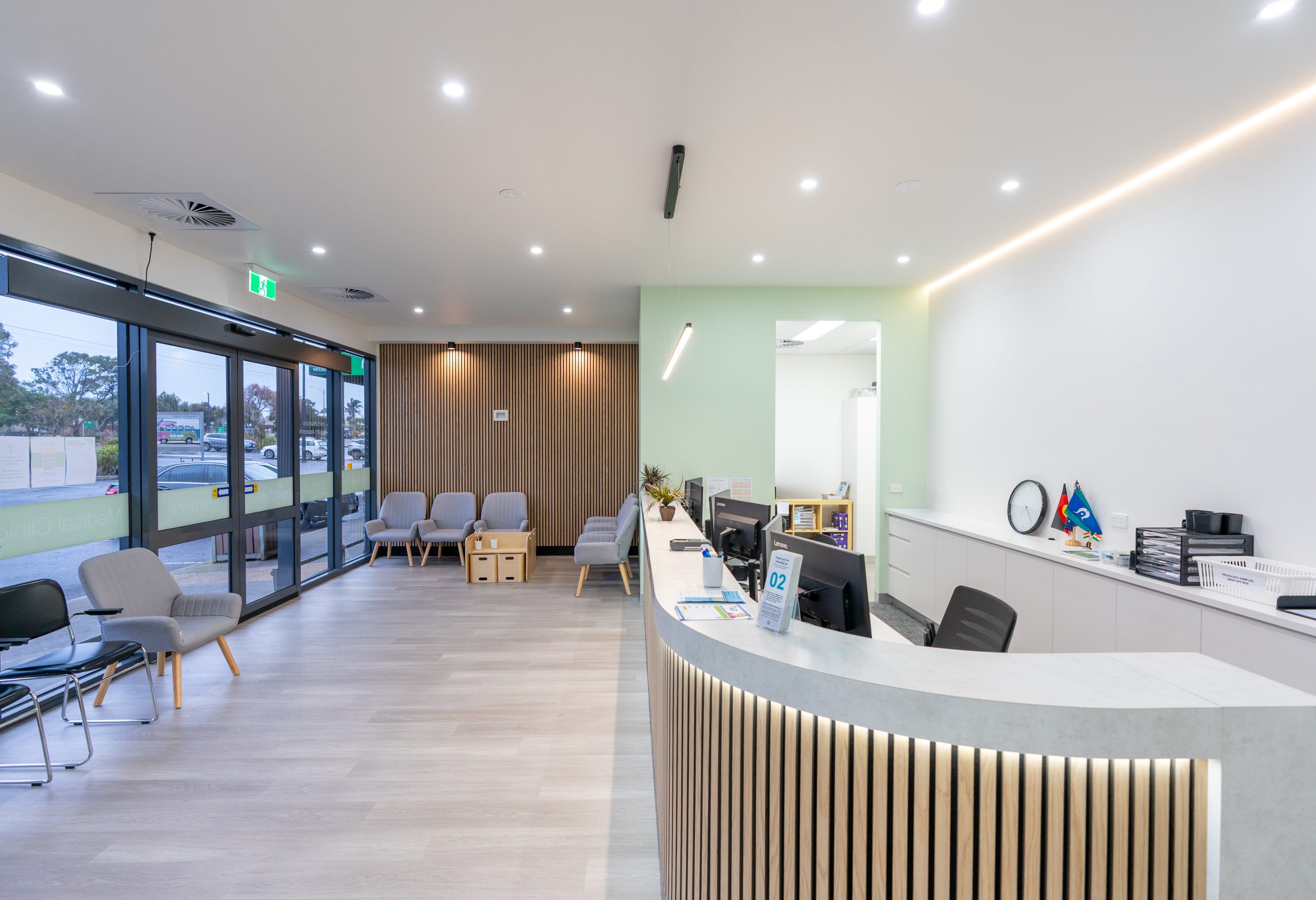
In a GP clinic, some of the most important moments happen quietly.
A patient lowers their voice to talk about a mental-health concern. A parent explains something sensitive about a child. Someone mentions a symptom they have delayed bringing up for months because it feels embarrassing, personal or difficult to say out loud. In those moments, privacy is not an abstract ideal. It is part of the care itself.
That is why consult-room design matters so much in general practice.
Many clinics assume privacy begins and ends with the door. If the door closes, the room must be private enough. In reality, patients judge privacy much more critically than that. They listen for footsteps outside. They notice voices from reception. They wonder whether the person in the next room can hear them. Even if no one actually overhears the conversation, the suspicion that they might be heard often changes how openly they speak.
For a GP clinic, that hesitation matters. General practice depends on honest disclosure. Patients are often discussing ongoing care, family issues, mental health, medications, sexual health, financial pressure or symptoms they are unsure how to describe. If the room feels acoustically exposed, the clinic risks getting a softer, more edited version of the truth.
A Closed Door Does Not Solve the Whole Problem
The reason many consult rooms underperform acoustically is simple: sound does not only travel through the middle of a wall.
It escapes around doors, through lightweight partitions, above ceilings, around services penetrations and through the general movement of a busy clinic. A room can look complete, calm and professional while still allowing speech to leak into adjacent spaces. That is why acoustic privacy is often one of the hidden details that separates a clinic that merely looks finished from one that actually supports trust.
In general practice, this issue can be even more noticeable because consult rooms are used continuously throughout the day. They are not occasional specialist rooms with long pauses between patients. They are active, repeated sites of conversation, often in close proximity to a corridor, nurses’ area or waiting room.
Patients Feel Acoustic Risk Before They Understand It
Most patients cannot tell you whether a wall has insulation, whether a partition runs properly to the slab above or whether a door seal has been specified well. What they can tell is whether the room feels private.
They notice if a receptionist’s voice is audible during a consult. They notice if another patient’s conversation carries from the room next door. They notice if a clinician lowers their own voice because the building does not seem to support a normal conversation.
That emotional reading matters. A GP clinic can have excellent practitioners and still lose some of the trust-building effect of the consultation if the environment feels acoustically thin. Patients who edit themselves do not always announce that they are doing it. They simply become less direct, less detailed and less comfortable.
Room Placement Is Part of Acoustic Design
Acoustic privacy is not only about wall construction. It starts earlier, at planning.
Where do the consult rooms sit in relation to reception, waiting and the central clinical hub? Does the door open directly onto a busy circulation line? Is a room positioned beside a staff area where phones, printers or quick clinical conversations happen all day? Are two highly sensitive rooms stacked together without enough separation strategy?
In a GP clinic, these adjacency decisions matter because they determine how much acoustic pressure the room is fighting from the start. A well-placed room has a better chance of feeling calm before any technical build-up is added. A poorly placed room can remain vulnerable even with better specifications.
The Physical Build-Up Still Matters
Once the layout is working in principle, the room still needs the right construction thinking behind it.
That may involve better wall build-ups, insulation, more thoughtful door-set decisions, careful treatment of gaps and penetrations, and attention to how ceilings and services are resolved around private rooms. The exact solution depends on the project brief and technical advice, but the underlying point stays the same: consult-room privacy should be planned, not assumed.
This is also where GP clinics benefit from specialist healthcare-fitout thinking rather than a generic commercial approach. A standard office mindset can treat a consult room like any other small meeting room. In practice, the consequences are different. Healthcare conversations carry more sensitivity, more emotional weight and more privacy responsibility.
Calm Matters as Much as Confidentiality
There is another reason to take acoustic privacy seriously in a GP setting: calm.
When a room is acoustically protected, the experience usually feels calmer for both patient and practitioner. The clinician does not need to manage around stray noise. The patient does not need to keep checking what is happening outside the room. The conversation can settle into a more natural pace.
That shift affects more than comfort. It supports focus, clearer histories and better rapport. In a clinic that wants patients to feel cared for rather than processed, those are not minor outcomes.
Privacy Should Be Tested in the Real Experience of the Clinic
The mistake many practices make is assuming privacy has been solved because the drawings looked tidy or because the room passed a visual inspection. A better question is more practical: what does the room sound like when the clinic is actually in use?
Can you hear registration conversations from the consult room? Can someone in the corridor pick up key phrases through the door? Does a phone at the nurses’ hub cut through the room once the clinic gets busy? These are the moments that reveal whether the fitout is supporting real confidentiality or only the appearance of it.
For GP practices planning a new clinic or renovation, acoustic privacy deserves to be part of the design brief from the beginning. Not because patients ask for “soundproofing” in those words, but because they notice when the room does not feel safe enough to talk openly.
In general practice, that feeling shapes care. A closed door is a start. It is not the finish.