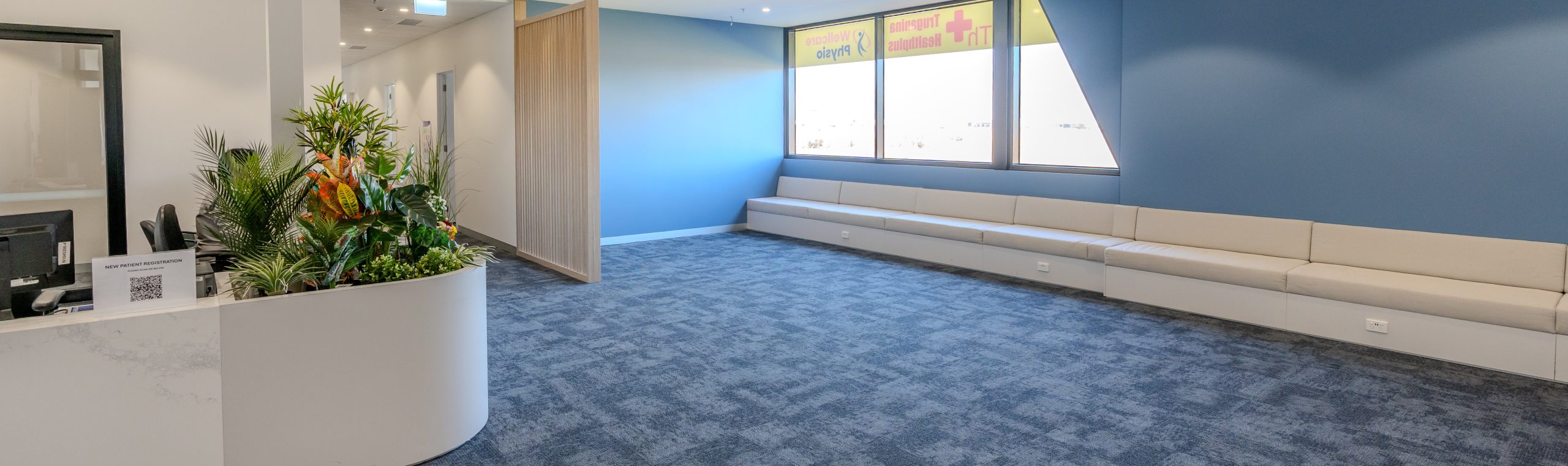
When an orthopaedic practice decides to bring physiotherapy, podiatry, sports medicine, or rehabilitation services under one roof, it’s an exciting step. Integrated care models genuinely improve outcomes. But getting the physical space right is where many practices either unlock that potential or quietly struggle with it for years. Here’s what thoughtful fitout planning looks like when you’re designing for a multi-disciplinary allied health environment.
Start With the Patient Journey, Not the Floor Plan
Before a single wall goes up, the most valuable question to ask is: how does a patient move through this space?
An orthopaedic patient referred for physiotherapy post-surgery has different needs to a podiatry patient walking in off the street, or an athlete recovering through a sports medicine program. Mapping these journeys early reveals where pathways overlap, where privacy matters most, and where the flow breaks down if the design isn’t considered carefully.
A well-planned reception and waiting area, for example, can serve multiple disciplines without feeling clinical or chaotic, but only if the adjacencies are right from the start.
Zoning: The Foundation of a Multi-Disciplinary Fitout
Successful integrated practices are built on smart zoning. Think of your space in layers:
- Clinical consultation rooms need acoustic privacy and enough space for examination, with consideration for equipment like examination beds and imaging viewers.
- Physiotherapy and rehabilitation areas often require the most floor space. Open gym-style rehab zones need high ceilings, resilient flooring, and infrastructure for equipment like parallel bars, resistance machines, and hydrotherapy if relevant.
- Podiatry treatment rooms are more contained but need specific plumbing considerations, good task lighting, and ergonomic layouts for both practitioner and patient comfort.
- Sports medicine consulting benefits from proximity to the rehab area, a short walk between consult and treatment reinforces the collaborative model you’re building.
Getting these zones to coexist without compromising any single discipline is a design challenge worth taking seriously.
Compliance Isn’t Optional, But It Doesn’t Have to Be Painful
Medical fitouts are governed by a specific set of requirements around accessibility, infection control, ventilation, and fire safety. For allied health spaces in particular, the Australian Health Facility Guidelines and relevant state regulations shape everything from corridor widths to hand hygiene station placement.
Working with a builder who understands these requirements from the outset, rather than retrofitting compliance at the end, saves significant time, cost, and stress. It’s one of the clearest reasons why medical fitout specialists exist as a distinct category from general commercial construction.
Future-Proofing Your Space
Allied health is evolving in telehealth, wearable monitoring and AI-assisted diagnostics. The technology landscape is shifting quickly, and your physical space should be able to adapt with it.
Practical future-proofing includes adequate data cabling and power capacity, flexible room configurations where possible, and storage solutions that don’t become obsolete as equipment changes. These aren’t expensive additions when they’re planned from the beginning; they become expensive when they’re added as afterthoughts.
Collaboration Starts With the Build
There’s something meaningful about a space that feels collaborative, where the design itself signals to both patients and practitioners that this is a team environment. Shared staff areas, visual connections between disciplines, and thoughtful wayfinding all contribute to a culture of integrated care before anyone even starts work.
If you’re planning an orthopaedic or allied health fitout — whether it’s a new build, a tenancy fit-out, or a refurbishment of an existing space — getting specialist advice early in the process makes every stage smoother.
The right construction partner understands both the clinical requirements and the commercial realities, and helps you get a space that works as hard as your team does.