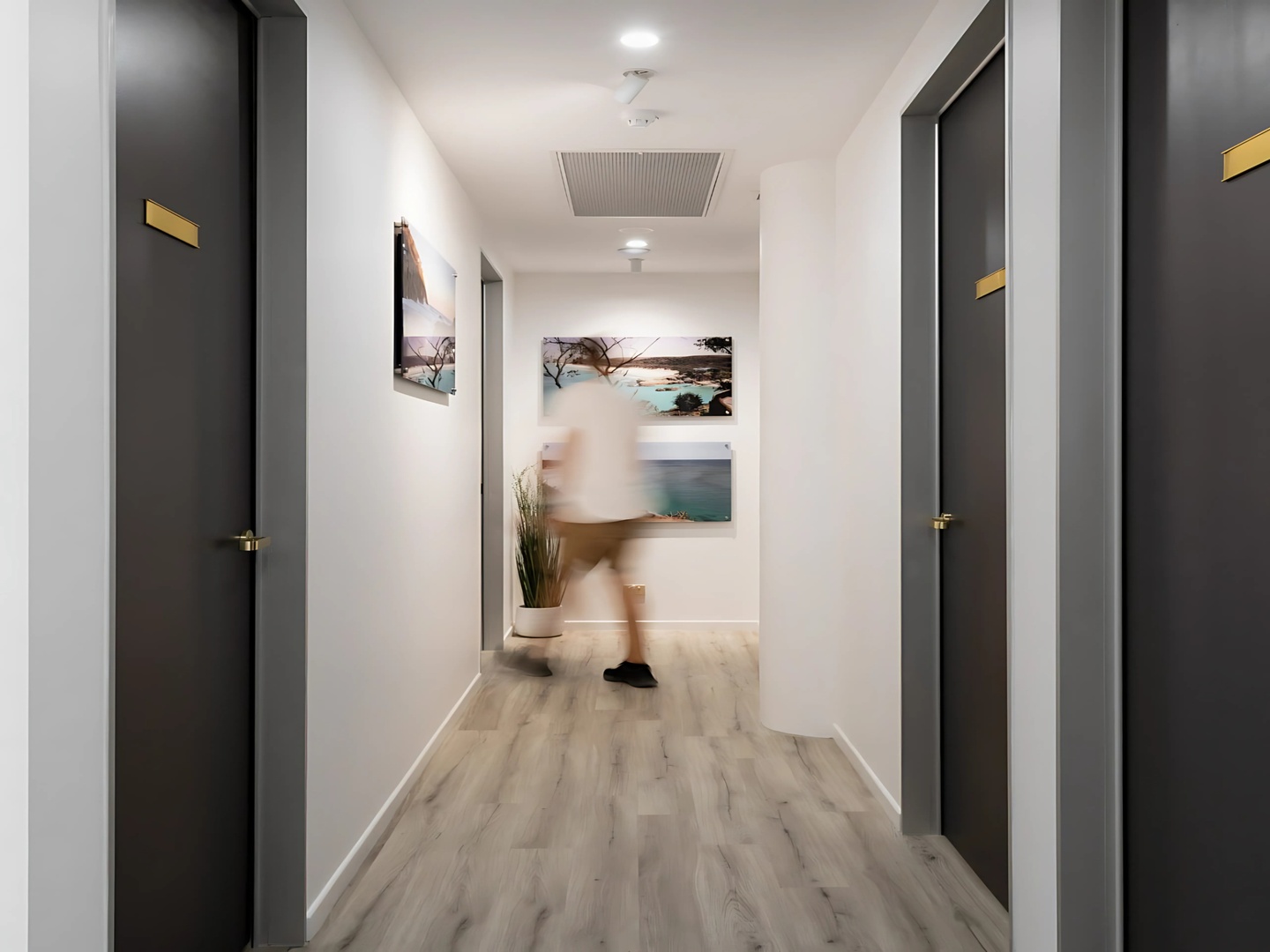
For orthopaedic surgeons, accessibility is more than a compliance requirement. It is central to the patient experience. Many patients arrive with joint pain, injuries, reduced strength, crutches, walkers, wheelchairs, or support people. A well-planned medical fitout helps them move through the clinic with greater comfort, safety, and confidence.
When opening or expanding a specialist practice, accessibility should be considered from the earliest stage of clinic design. Small layout decisions can have a major impact on how patients, doctors, and staff use the space every day.
Reception and Waiting Area
The entry point is a good place to begin. Door widths should allow easy access for wheelchairs, mobility aids, and patients who may need assistance. Automatic or easy-opening doors can also reduce strain for people with shoulder, wrist, hip, or knee injuries. Where level access is not possible, ramps should be designed with safe gradients, handrails, slip-resistant surfaces, and enough landing space.

Inside The Clinic
Circulation space is essential. Corridors, waiting areas, reception zones, and consulting rooms should allow patients to turn, pause, and move without feeling crowded. In an orthopaedic setting, this is especially important because patients may be moving slowly or relying on mobility aids. A thoughtful healthcare fitout avoids tight corners, cluttered pathways, and awkward room transitions.
Seating is another key detail. Standard low lounge seating may look comfortable, but it can be difficult for patients with hip, knee, or back issues. Orthopaedic clinics benefit from a mix of seating heights, firm support, armrests, and enough space for wheelchairs or walkers. This helps patients sit and stand with less discomfort.
Handrails and support points can also improve safety. They may be useful near ramps, accessible bathrooms, longer corridors, and areas where patients need to transfer or steady themselves. In a well-considered medical clinic fitout, these features feel integrated rather than clinical or intrusive.
Flooring should be durable, hygienic, slip-resistant, and easy to clean. It also needs to support safe movement for patients using crutches, frames, or wheelchairs. Avoiding sudden level changes, overly glossy finishes, and loose mats can reduce trip and slip risks while maintaining a professional finish.
Accessible Bathroom Access
This is another critical part of medical practice design. Bathrooms should be easy to locate, large enough for assisted use, and fitted with appropriate grab rails, clear circulation space, non-slip flooring, and easy-to-use fixtures. For patients recovering from surgery or managing chronic joint conditions, this can make a significant difference to comfort and dignity.
Consulting and Treatment Rooms
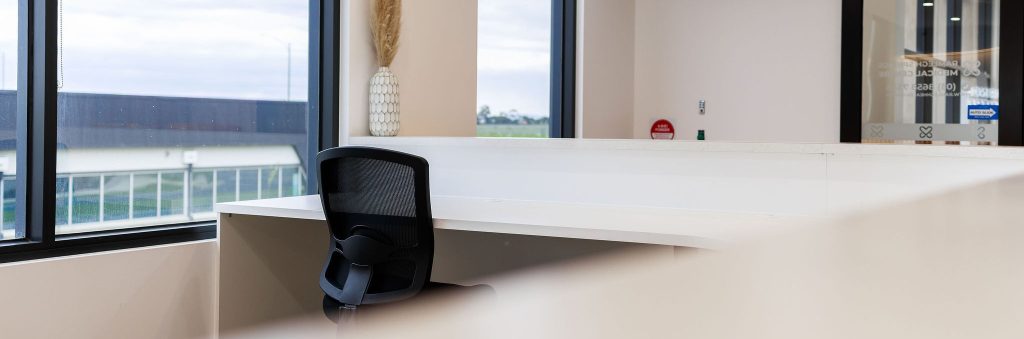
Orthopaedic specialists often require space for examinations, mobility assessment, support people, and clinical equipment. A quality clinic fitout allows the doctor to work efficiently while giving patients enough space to enter, sit, transfer, and move safely.
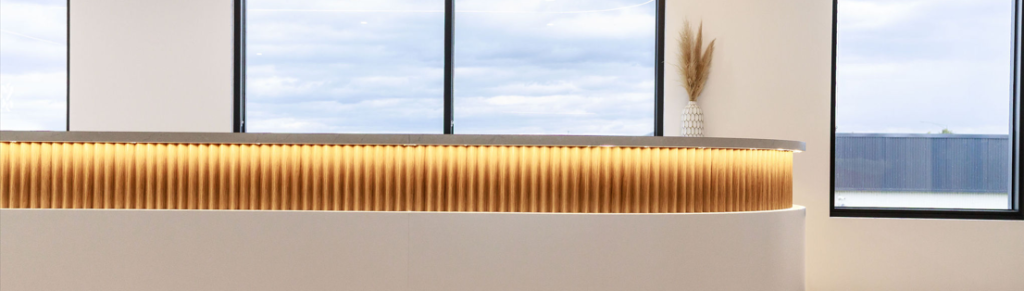
Designing for accessibility does not mean compromising on style.
With the right medical fitout builder, accessible features can be built into a warm, modern, and professional clinic environment.
For orthopaedic practices, accessible design is good healthcare design. It supports safer movement, smoother workflows, and a better experience for patients who may already be dealing with pain or limited mobility. A clinic that is easy to enter, navigate, and use sends a clear message: your patients’ comfort and care have been considered from the ground up.