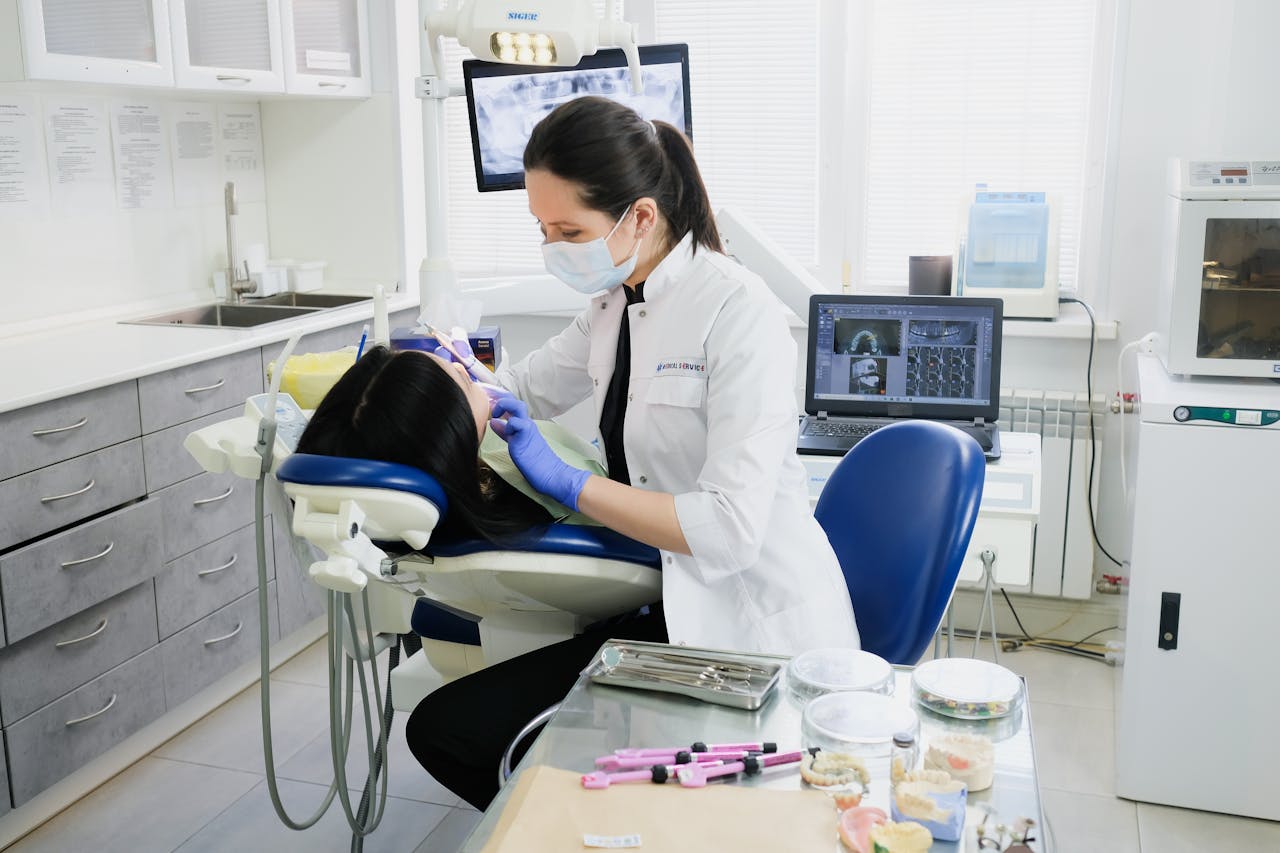
Dental Fitout Regulations and Compliance in Australia
Building or refurbishing a dental clinic involves far more than selecting the right chair or choosing a colour palette. Before a single wall goes up, you’re working within a detailed web of national and Victorian regulations, and getting it wrong can mean costly rectifications, delayed openings, or worse, failed inspections that put your patients at risk.
Here’s a clear breakdown of every compliance area you need to understand before your dental fitout begins.
Quick Answer
- Dental practices in Victoria must comply with the National Construction Code (NCC), the Radiation Act 2005, and updated infection control standards under AS 5369:2023
- Most dental clinics fall under NCC Building Class 9a. This drives requirements across fire safety, accessibility, ventilation, and more
- Non-compliance can result in stop-work orders, fines, and mandatory retrospective upgrades that cost far more than getting it right upfront
- Partnering with a specialist fitout provider ensures every regulation is addressed before construction starts
Building Classification: Why NCC Class 9a Matters
The National Construction Code (NCC) is the primary framework governing building design and construction across Australia. For dental practices, the most critical classification is Class 9a, which applies to health-care buildings where patients may require assistance during evacuation.
Most dental clinics fall under Class 9a. If you’re fitting out a space currently classified differently (say, a retail tenancy or residential property), you’ll need to bring it up to 9a standards first, which can significantly affect your budget and timeline.
Class 9a compliance shapes requirements across fire safety, egress, ventilation, structural separation, and accessible design. It informs every design decision from day one.
Infection Control: The New Standard Is AS 5369:2023
Infection control is one of the most scrutinised areas of any dental fitout. The recently updated AS 5369:2023 has replaced both AS/NZS 4815:2006 and AS/NZS 4187:2014 as Australia’s primary standard for the reprocessing of reusable medical devices.
Your fitout must physically support compliance with this standard. That means:
- A dedicated sterilisation room with appropriate separation from the clinical zone to prevent cross-contamination
- A decontamination sink separate from clinical handwash basins
- Surfaces and finishes that are non-porous, seamless where possible, and easy to clean
- Clearly defined dirty-to-clean workflow built into the room layout
The Australian Dental Association Victorian Branch (ADAVB) notes that transitioning to AS 5369:2023 is proving challenging for many practices, which is why it’s far better to design for it from the outset rather than adapt after the build.
Radiation Compliance in Victoria
If your practice uses any X-ray equipment (intraoral units, OPG, cephalometric, or CBCT), you must meet the requirements of the Radiation Act 2005 (Vic) before taking possession of any machine.
That means:
- A Radiation Management Licence issued by the Victorian Department of Health (compulsory before any X-ray unit arrives on site)
- A Radiation Management Plan (RMP) (required for all new applications and variations since September 2021)
- Individual use licences for each practitioner operating radiation equipment
- A shielding report prepared by a certified radiation physicist, specifying wall, floor, and ceiling protection for each room housing X-ray equipment
The ARPANSA Code for Radiation Protection in Dental Exposure (RPS C-7) sets the national requirements. In Victoria, these are enforced under state legislation. Operating without the appropriate licences is a criminal offence under the Act.
Radiation shielding cannot be retrofitted cheaply. The shielding assessment must be completed before construction, and the builder must follow it exactly.
Accessibility: DDA and AS 1428.1
Under the Disability Discrimination Act 1992 (DDA) and the NCC, dental practices must provide accessible entry and facilities for patients with disabilities. The technical requirements are set out in AS 1428.1, which covers:
- Step-free entry with compliant ramp gradients
- Door widths and clearances for wheelchair users
- Accessible bathroom with grab rails, turning space, and emergency call
- Reception counters at accessible heights
Non-compliance with accessibility requirements can’t be resolved after walls are built. It must be included in the design drawings before a permit is issued.
Fire Safety and Services Compliance
Class 9a buildings are subject to more demanding fire safety requirements than standard commercial spaces. These include:
- Fire-rated building materials for walls, doors, and structural elements meeting specified Fire Resistance Levels (FRLs)
- Clearly marked and compliant emergency exit paths
- Smoke detection and fire suppression systems meeting AS 1851 for ongoing maintenance
- Body protection (electrical safety switches) in all consulting rooms, which are mandatory for dental fitouts in Victoria
Ventilation is also regulated. Surgery rooms require a minimum number of air changes per hour, with appropriate exhaust and filtration to manage airborne risk.
Planning Permits and the Approval Process
Before construction starts, you’ll likely need one of two types of statutory approval:
- A Building Permit, almost always required for commercial fitouts in Victoria, is issued through a registered building surveyor
- A Planning Permit or Development Application (DA) is required when changing a building’s use, undertaking structural work, or operating in a heritage-listed zone
Approval pathways should be mapped before you sign a lease. Building permits typically take up to 14 days once documentation is in order, but planning permits involving council can take months. A fitout specialist can identify the right pathway early and protect your timeline.
What Happens If You Don’t Comply?
The consequences of non-compliance aren’t abstract. They include:
- Stop-work orders that halt construction mid-build
- Mandatory retrospective upgrades, which are often far more expensive than getting it right upfront
- Failed inspections that delay your opening and affect your AHPRA registration
- Radiation licence offences under the Radiation Act 2005 that carry serious penalties
- Liability exposure if a patient safety incident is linked to a non-compliant design
The Easiest Way to Stay Compliant: A Specialist Fitout Partner
The most reliable way to navigate dental fitout compliance in Victoria is to work with a provider who understands every regulation and builds compliance into the project from day one, not as an afterthought.
At SoulMED, our team specialises in dental fitouts across Victoria, alongside a full range of medical fitouts, healthcare fitouts, and veterinary fitouts. We manage every aspect of the compliance process, from NCC classification and building permits through to radiation shielding assessments, infection control design, and DDA accessibility, so you can stay focused on your patients, not the paperwork.
Get in touch with the team to discuss your dental fitout project.