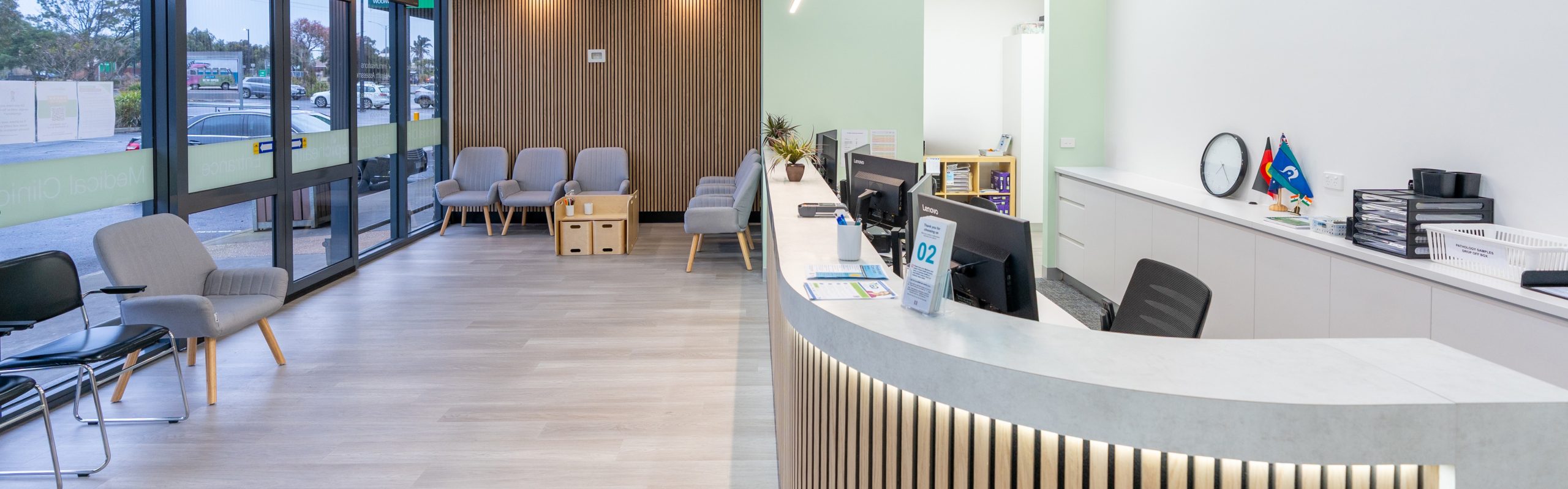
Sustainability in construction is often framed as a trade-off.
“Lower cost means lower quality.”
“Reused materials mean reduced finish.”
“Eco-friendly means compromise.”
We don’t see it that way.
At its best, circular design isn’t about doing less, it’s about thinking more. More intentionally. More creatively. More responsibly. And when approached properly, reuse and repurposing don’t dilute a space, they elevate it.
Because premium doesn’t mean excess. Premium means considered.
And circular design is one of the most considered approaches we can take.
What Circular Design Really Means
Circular design moves away from the traditional “take, make, dispose” model and toward a more thoughtful cycle:
- Reuse where possible
- Repurpose with intention
- Specify materials for longevity
- Minimise waste at every stage
- Design for adaptability over time
In healthcare environments, this approach requires experience. Medical spaces, in particular, demand durability, compliance and hygiene standards that cannot be compromised.
But sustainability and performance are not mutually exclusive. With the right planning and the right trades, they work hand in hand.
Repurposing Materials Without Compromising Finish
One of the biggest misconceptions in our industry is that reused materials look recycled.
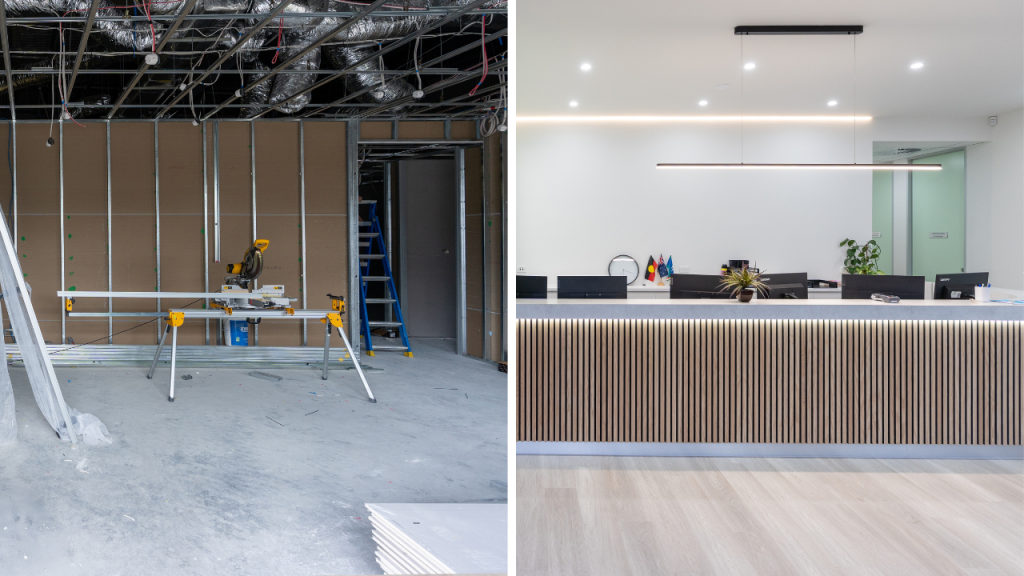
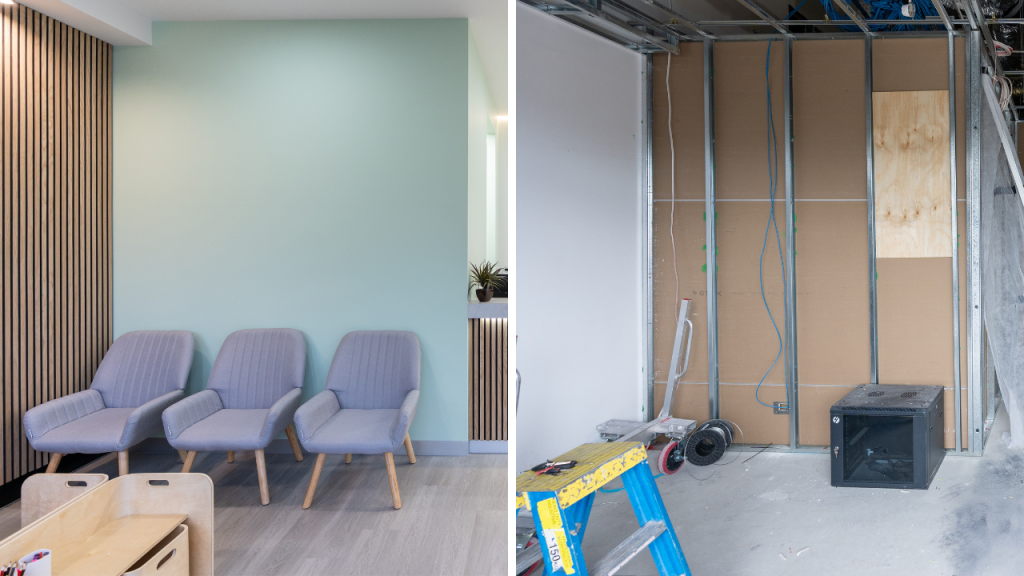
In reality, when carefully selected and properly detailed, repurposed elements can bring warmth, character and authenticity to a space.
Examples we’ve seen succeed include:
- Retaining structural elements and exposing them as architectural features
- Refinishing rather than replacing doors, frames and select fixtures
- Reusing high-quality partitions during medical fitout reconfigurations
These decisions reduce landfill waste and embodied carbon but just as importantly, when something is well built, it deserves a second life.

Designing for Longevity from the Start
True circular design doesn’t begin during demolition. It begins at concept stage.
Intentional decisions can dramatically reduce long-term environmental impact:
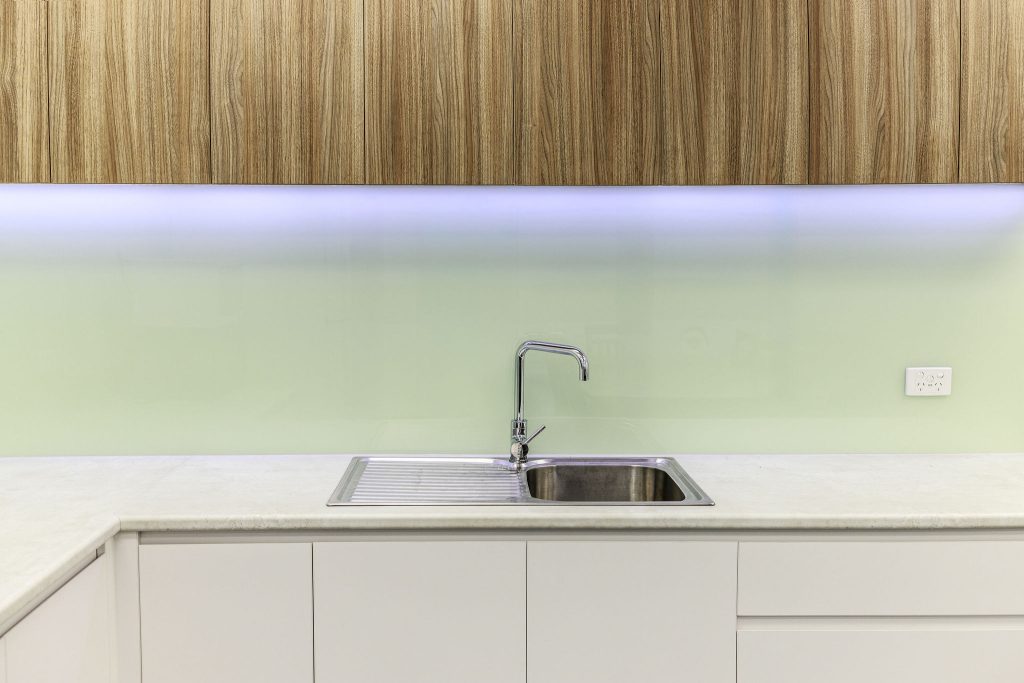
- Selecting modular joinery that can be reconfigured
- Choosing durable, high-performance finishes suited to medical environments
- Specifying materials with low VOC emissions for healthier indoor air
- Designing flexible layouts that adapt as practices grow
- Working with local Victorian suppliers to reduce transport impact
When we plan for adaptability, we extend the lifecycle of a space. And longevity is one of the most powerful sustainability strategies available.
Where Sustainability Meets Premium Standards
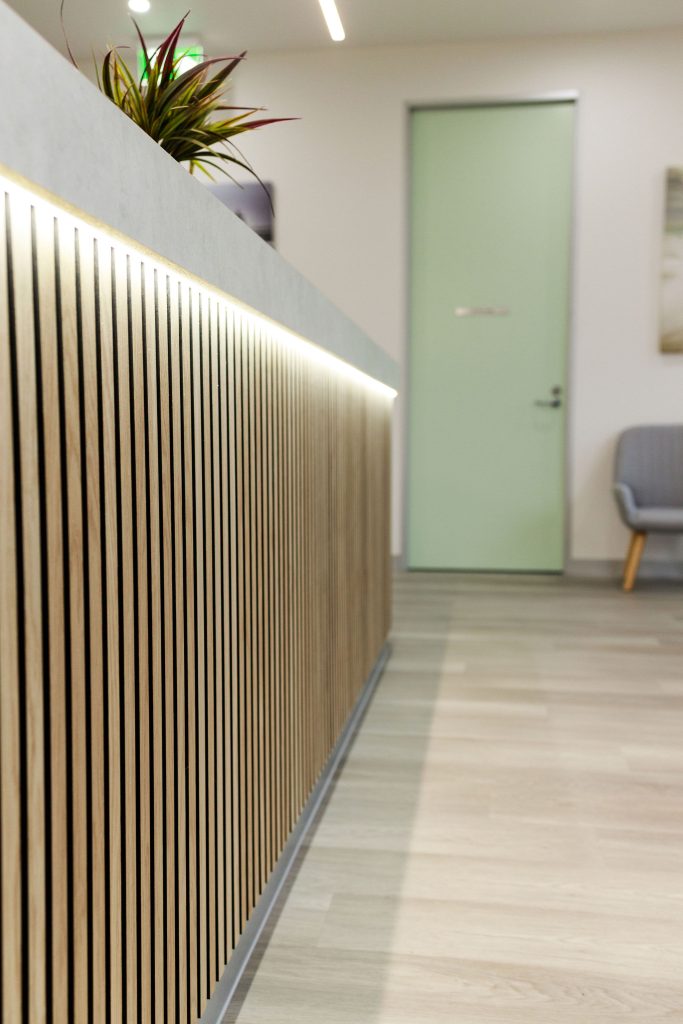
We firmly believe that even medical spaces deserve the same quality, finish and design consideration as any top-tier commercial build.
Circular design does not mean cutting corners. It means elevating standards.
A sustainably delivered healthcare environment can still offer:
- Seamless detailing
- Acoustic comfort
- Warm, welcoming reception areas
- Calm and thoughtfully lit consultation rooms
- High-performance, hygienic materials
The difference is that every decision is deliberate.
Premium isn’t about adding more, it’s about choosing better.
Practical Tips for Builders and Clinic Owners
For those looking to adopt circular principles in medical spaces, here are a few starting points:
| Audit Before You Demolish | Conduct a detailed review of what can be retained, refinished or reconfigured. |
| Design for Flexibility | Future-proof layouts. Consider how spaces may evolve over five to ten years. |
| Invest in Quality the First Time | High-quality materials are more likely to be reused or repurposed later. Cheap finishes rarely survive one lifecycle. |
| Engage Trades Early | Experienced local trades often see reuse potential others miss. |
| Think Beyond Initial Cost | Circular decisions often reduce long-term maintenance, replacement and waste costs. Sustainability becomes commercially viable when viewed across the full lifecycle of a space. |
Let’s Raise the Benchmark
Circular design is about more than environmental impact. It’s about responsibility to our clients, our trades, our suppliers and our community.
We demonstrate that high standards and sustainability are not competing priorities, they are complementary.
Healthcare environments shape daily experiences for practitioners, staff and patients alike. They deserve more than functional compliance. They deserve thoughtful, intentional design.
Circular construction is one way we can raise the benchmark.
- By reusing wisely.
- By repurposing creatively.
- By building responsibly.
And by proving that premium quality and environmental stewardship can and should coexist.