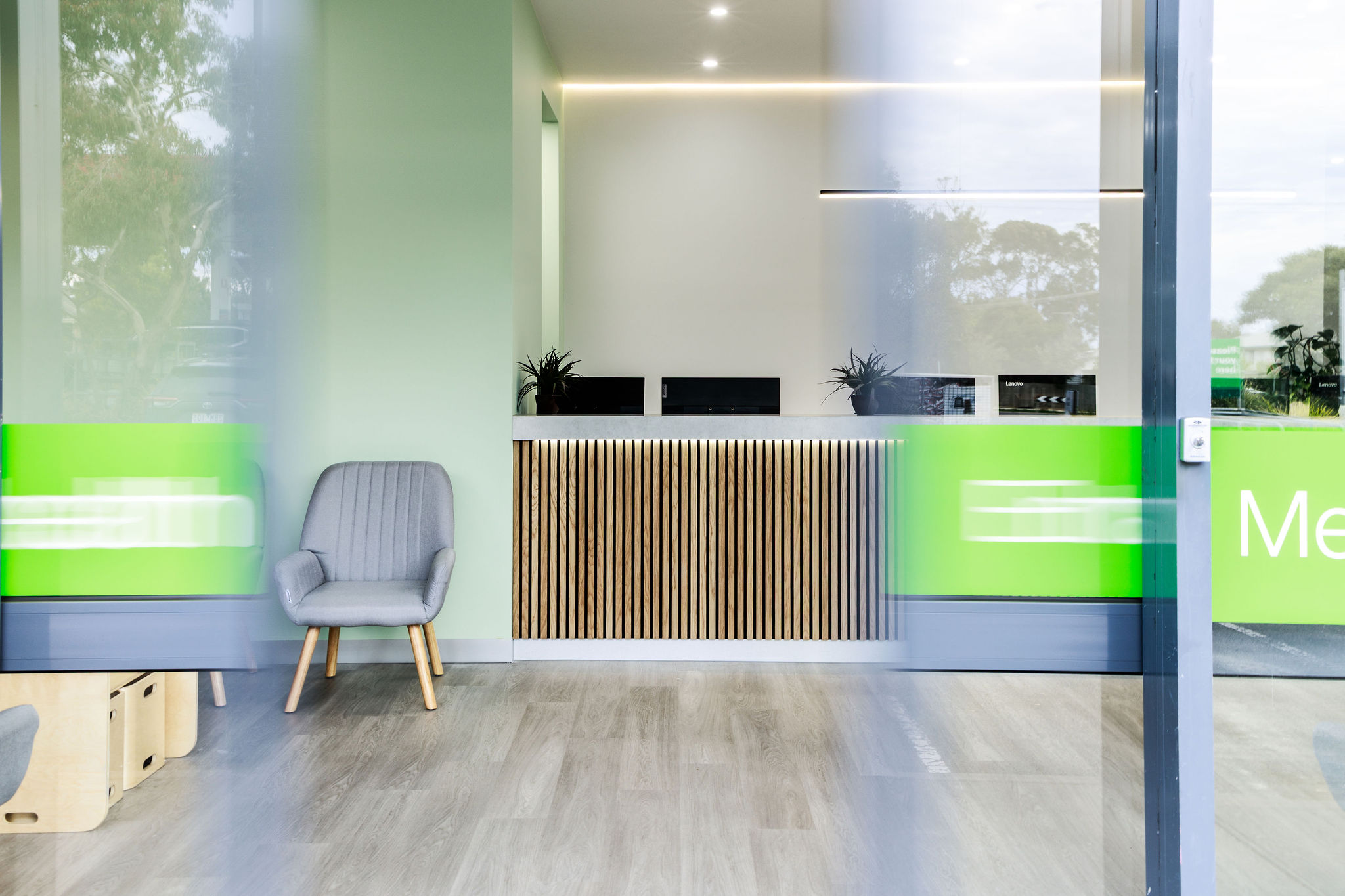
Designing and delivering medical fitouts in regional and rural Victoria requires a specialised approach. Clinics in country towns play a vital role in supporting community health, and their buildings must be designed to be efficient, adaptable, and durable. However, working in rural locations also brings logistical, environmental, and infrastructure-related challenges that differ from metropolitan projects.
For healthcare professionals planning a new clinic build, refurbishment, or expansion, understanding these challenges, and how to overcome them, can help ensure long-term operational success.
1. Planning Fitouts Around Regional Infrastructure
Many rural clinics operate in older buildings or multipurpose community facilities that were not originally built for modern healthcare needs.
This can present design considerations around:
- Floorplan reconfiguration
- Compliance with current healthcare standards
- Integration of digital health technologies
- Accessibility and patient flow
The Victorian Health Building Authority (VHBA) emphasises the importance of upgrading and modernising regional health facilities to support current models of care. Their Regional Health Infrastructure Fund (RHIF) provides support for rural health capital works, enabling clinics to deliver contemporary, patient-centred services.
| Practical solutions: |
| – Conduct early site assessments to identify structural or services constraints – Incorporate flexible, modular design for future adaptability – Use technical materials and layouts that enhance infection control and durability – Work with a fitout partner experienced in rural refurbishments and conversions |
2. Navigating Logistics & Supply Chain Timing
Delivering construction projects in rural Victoria often requires additional planning around:
- Transporting specialised materials or medical equipment
- Coordinating multiple trades across greater distances
- Weather variations that affect construction timelines
These factors can influence project duration, but with a coordinated approach, they are manageable.
| Strategies to stay on track: |
| – Schedule long-lead items (e.g., medical joinery, HVAC equipment) early – Combine local trades with specialist healthcare construction teams – Use prefabrication where possible to reduce on-site time – Build buffer periods into project timelines for rural transport and delivery windows |
The VHBA notes that strong regional project planning is essential to support continuous service delivery during upgrades.
3. Designing Clinics for Multi-Functional Use
Rural clinics often service wide catchment areas and diverse patient needs. Because of this, healthcare buildings in regional Victoria benefit from:
- Multi-purpose consulting rooms
- Adaptable treatment spaces
- Rooms that support GP, allied health, dental, or visiting specialists
- Flexible layouts that can evolve with community demand
The Regional and Remote Health Report from the Australian Institute of Health and Welfare highlights the importance of flexible service delivery models in rural communities.
| Fitout recommendations: |
| – Use movable partition systems where appropriate – Incorporate telehealth-ready rooms with privacy and sound insulation – Plan storage strategically to maximise floor area – Design for accessibility and comfort for patients of all ages |
4. Integrating Telehealth and Digital Infrastructure
Telehealth is now an essential component of rural healthcare delivery. Ensuring your clinic’s physical environment supports digital health is critical.
Key considerations include:
- Reliable data cabling and network redundancy
- Dedicated telehealth rooms
- Acoustic control and visual privacy
- Appropriate lighting and ergonomic layouts
The Victorian Department of Health recognises digital health as a major enabler for improving access in regional communities, and recommends early integration of digital infrastructure during capital planning.
| Best practice design elements: |
| – Build in capacity for future digital expansion – Include UPS or backup power to protect critical equipment – Ensure server, comms, and telehealth spaces are climate-controlled |
5. Creating Patient-Centred, Community-Focused Clinics
In rural towns, healthcare buildings often serve as key community touchpoints.
A well-designed clinic can:
- Improve patient comfort and accessibility
- Support privacy and dignity
- Enhance operational efficiency for clinical teams
- Provide a welcoming environment for families, older adults, and local residents
Community-connected design is also a priority identified in Victorian healthcare planning guidelines, which stress the importance of culturally appropriate and accessible spaces for regional populations.
| Effective design strategies: |
| – Provide intuitive wayfinding and entry points – Create calming waiting areas with natural light – Ensure circulation spaces support diverse mobility needs – Incorporate regional identity through design elements where appropriate |
6. Ensuring Compliance & Future-Proofing
Healthcare construction requires strict adherence to:
- Australian healthcare building standards
- Infection prevention guidelines
- Disability access requirements
- HVAC and air quality regulations
In regional areas, designing for resilience is also important, whether that relates to extreme weather, power reliability, or long-term maintenance.
| Future-proofing your clinic: |
| – Choose durable materials that withstand local environmental conditions – Plan for sustainable systems (solar, energy-efficient HVAC, smart lighting) – Design mechanical and electrical systems for long-term serviceability – Use a staged development plan for future expansion |
Conclusion
Building or upgrading a healthcare clinic in rural Victoria requires thoughtful planning, specialist expertise, and a deep understanding of regional needs. While there are unique considerations, from logistics to infrastructure, the right design and construction approach ensures clinics remain efficient, modern, and adaptable for years to come.
As a construction company specialising in medical fitouts, we help rural healthcare providers deliver spaces that are:
- compliant
- highly functional
- patient-centred
- designed to support evolving models of care
If you’re planning a rural clinic build or refurbishment, we’d be happy to assist with feasibility assessments, design planning, or complete fitout delivery.
Get In Touch with Our Team Today!