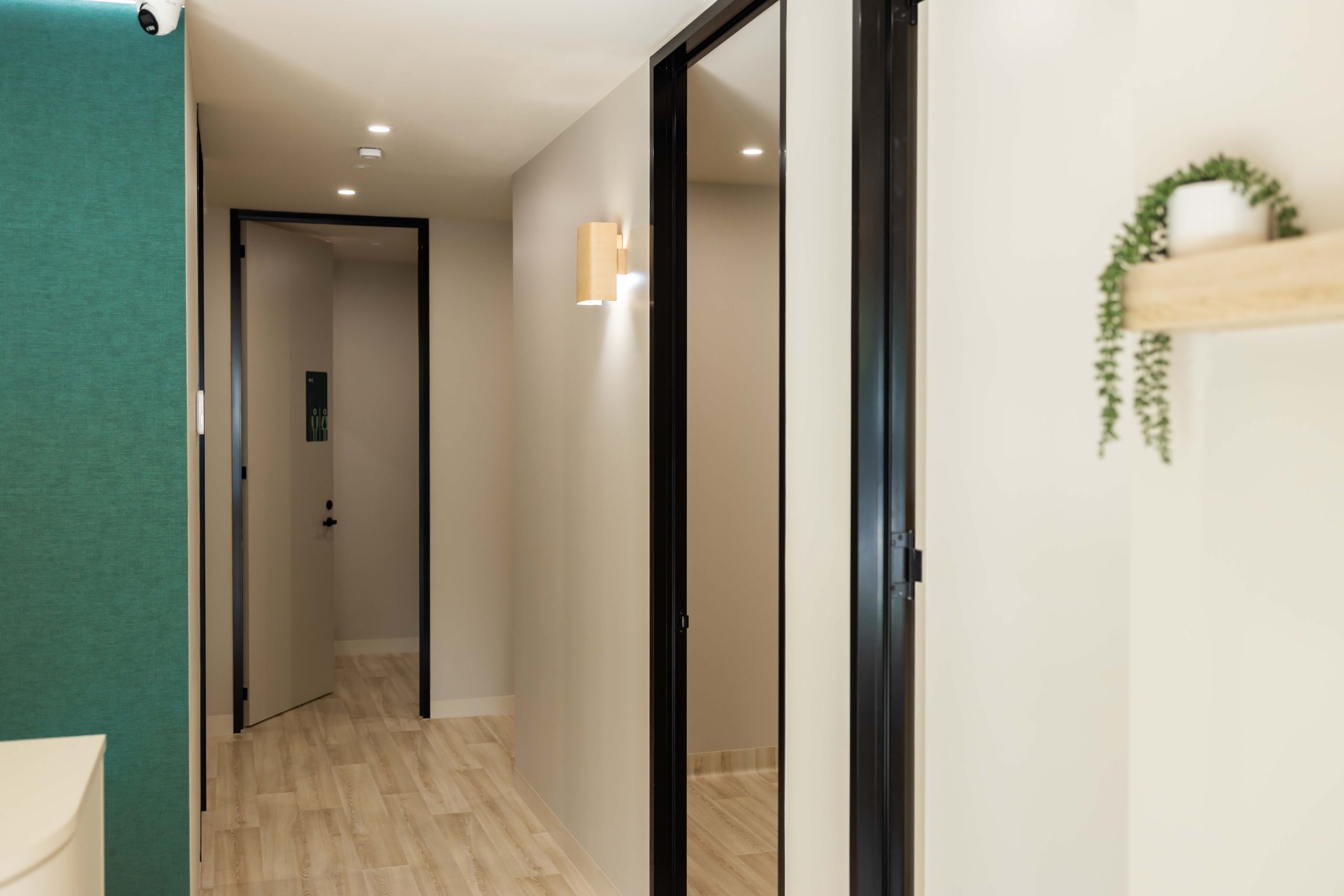
Endocrinology is one of the specialties most influenced by long-term data, continuous monitoring, and coordinated care. Conditions such as diabetes, thyroid disorders, and metabolic disease are not managed in isolated visits, they rely on ongoing information, shared care between professionals, and increasingly, digital health tools.
As a result, the physical clinic is no longer just a place for face-to-face consultations. It’s becoming a connected hub within a broader healthcare ecosystem.
Future-proofing an endocrinology clinic fitout means designing spaces that can support this shift, not just today, but as healthcare delivery continues to evolve.
Designing for Digital-First Healthcare Delivery
Digital systems are now central to endocrinology practice, from electronic medical records to remote patient monitoring and telehealth consultations.
To support this, clinics need infrastructure that is robust, reliable, and scalable.
Key design considerations include:
- Integrated data and network systems throughout the clinic
- Consultation rooms designed for screen-based patient engagement
- Reliable connectivity for telehealth and remote consultations
- Secure systems to protect sensitive patient health data
- Flexible technology layouts that can adapt to new platforms
Importantly, technology should be embedded into the design and not added as an afterthought.
Supporting Hybrid Care Models (In-Person + Remote)
Many endocrinology patients now move between in-clinic appointments and remote care. This hybrid model is becoming standard practice rather than an exception.
Clinic design needs to support both modes seamlessly.
This can be achieved through:
- Consultation rooms equipped for video consultations as standard
- Private, acoustically controlled spaces for virtual appointments
- Layouts that allow clinicians to switch between in-person and remote care efficiently
- Waiting and reception areas that support flexible appointment types
- Administrative zones designed for digital workflow management
When done well, hybrid care becomes a natural extension of the clinic rather than a separate system.
Integrated Care and Multidisciplinary Collaboration
Endocrinology is rarely delivered in isolation. It often involves collaboration with dietitians, diabetes educators, exercise physiologists, and other allied health professionals.
This shift toward integrated care models has direct implications for clinic design.
Future-ready clinics often include:
- Shared consultation or education rooms for multidisciplinary use
- Co-located allied health spaces within the same facility
- Flexible rooms that can switch between individual and group consultations
- Centralised communication areas for care coordination
- Layouts that reduce barriers between different care providers
The physical environment should actively encourage collaboration, not fragment it.
Infrastructure Built for Data and Connectivity
As healthcare becomes more data-driven, endocrinology clinics are increasingly reliant on continuous information flow.
This includes:
- Patient monitoring data from wearable devices
- Shared records across multiple healthcare providers
- Digital imaging and diagnostic tools
- Cloud-based healthcare platforms
To support this, clinics require:
- High-capacity structured cabling systems
- Strong and stable wireless coverage across all areas
- Dedicated IT and communications infrastructure spaces
- Scalable systems that can handle future digital expansion
Without this foundation, even the best digital tools can become unreliable in practice.
Designing Flexibility into Clinical Spaces
Healthcare technology and delivery models will continue to change. The most resilient clinics are those designed with flexibility at their core.
This includes:
- Standardised consultation room layouts that can be repurposed
- Modular internal walls or partitions where appropriate
- Future capacity built into electrical and data systems
- Multi-use rooms that support evolving service delivery models
- Infrastructure zones that allow upgrades without major disruption
Flexibility reduces the need for costly redevelopment as clinical needs evolve.
The Shift From Static Clinics to Connected Healthcare Environments
The traditional idea of a clinic as a fixed, self-contained space is changing.
Endocrinology practices are increasingly part of a wider, connected system that includes hospitals, allied health networks, and remote care platforms.
Future-proof clinic design recognises this shift by focusing on:
- Connectivity over isolation
- Flexibility over rigidity
- Integration over separation
- Long-term adaptability over short-term optimisation
The most successful clinics will be those that can evolve alongside both technology and patient expectations.
Future-proofing an endocrinology clinic is not about predicting every technological advancement. It’s about creating a built environment that can adapt to change without disruption.
When digital infrastructure, flexible layouts, and integrated care models are considered from the outset, the clinic becomes more than a place of consultation — it becomes a resilient healthcare hub designed for the future of medicine.