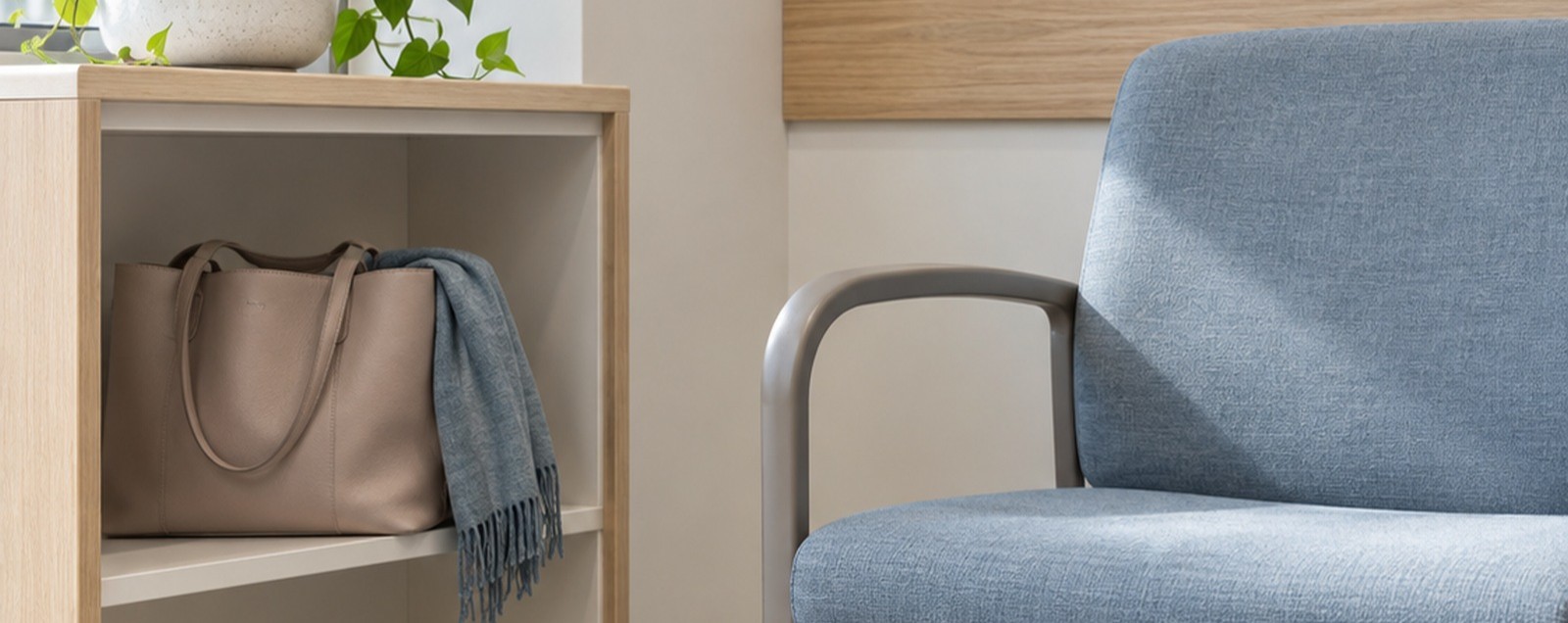
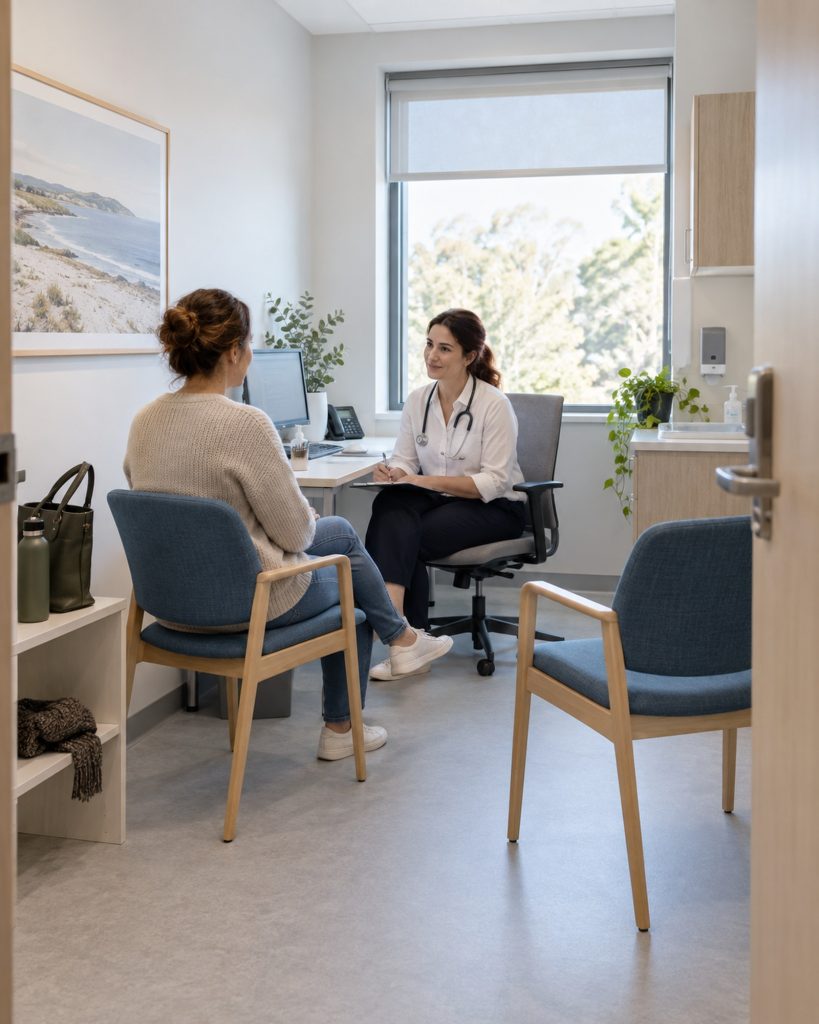
A patient enters a consultation room carrying a handbag, a jacket and a folder. The visitor chair is clear, but the only nearby surface belongs to the clinician. The patient pauses, asks where to put everything, then balances the folder on their lap and leaves the bag beside their feet.
It is a small moment, easily overlooked in a floor plan. It also reveals whether the room has made space for the person arriving, as well as the clinical work about to happen. Belongings deserve deliberate consideration in a healthcare fitout because patients rarely arrive empty-handed.
A thoughtful solution can support dignity and make the appointment easier to begin. It does not need to be elaborate. It needs to suit the room, the people using it and the practice’s procedures.
Treat belongings as part of the appointment sequence
A room schedule might identify a desk, guest seating and clinical equipment while saying little about the items a patient brings. Yet those items move through the appointment too. A bag may arrive beside a chair, move when the person changes position and be collected again before leaving.
Start by describing the actual service. Which belongings commonly arrive? Does a patient remain seated throughout, or move to another part of the room? Is a companion often present? The answers will differ between a general consultation and other appointment types.
Avoid copying a storage detail simply because it appears in an attractive clinic photograph. A shelf that works beside one chair may be difficult to reach from another position. A closed cupboard may introduce a need for instructions that an open resting place would not.
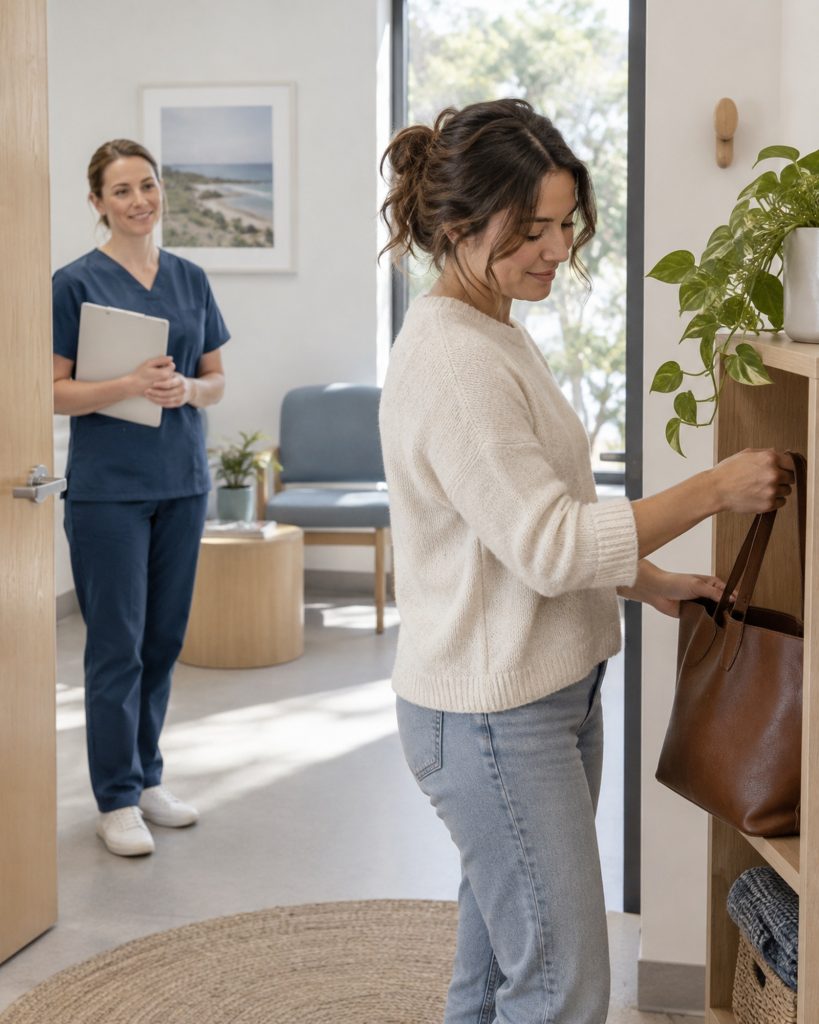
Give the patient a recognisable place
When every horizontal surface is occupied by equipment or staff materials, the patient has to guess which space is available. A clearly explained place for ordinary belongings can remove that small negotiation from the opening of the appointment.
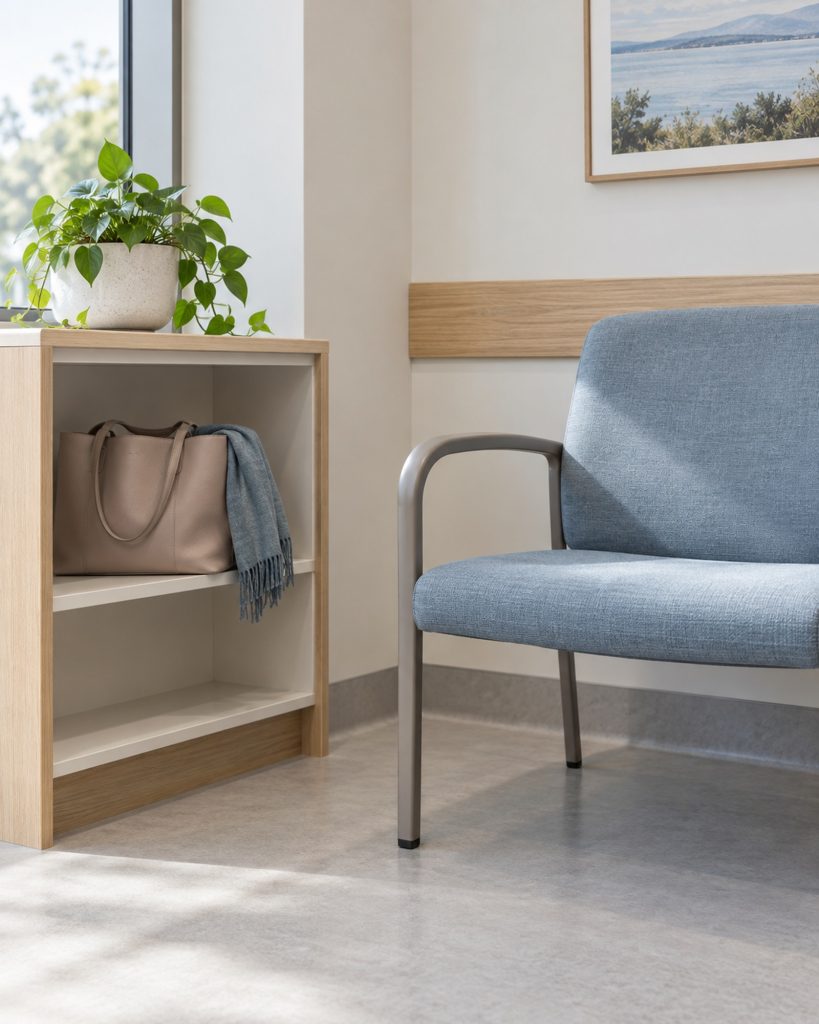
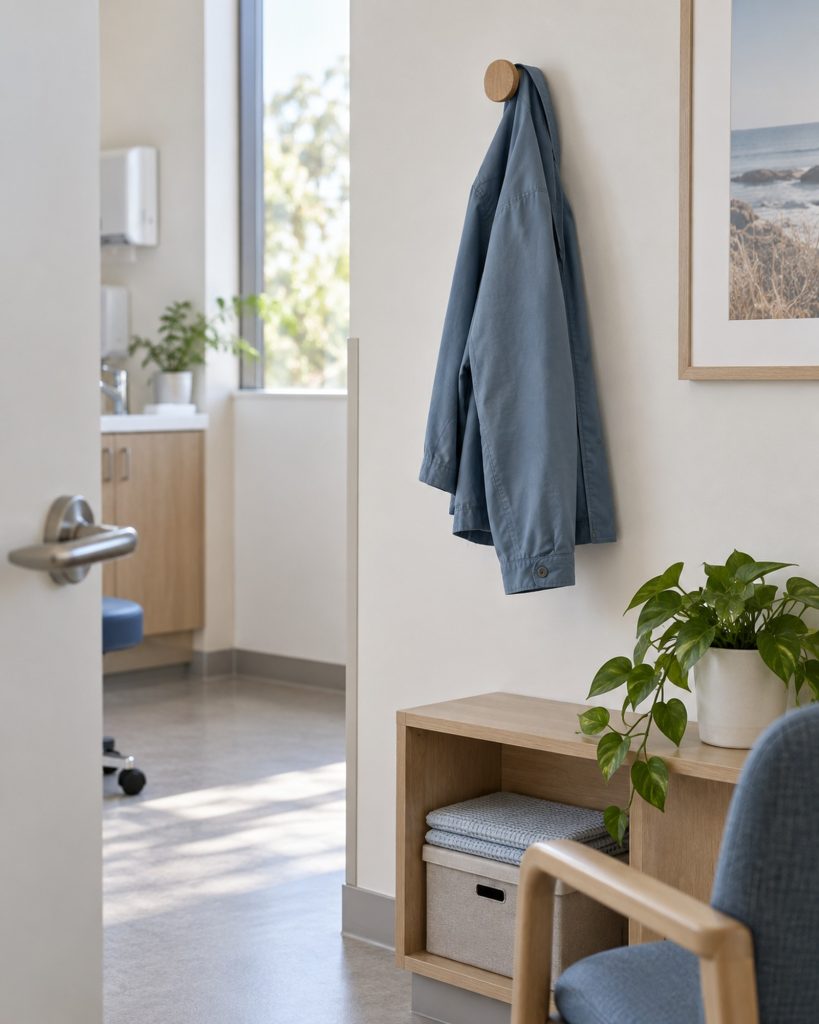
A modest shelf, an appropriate hook or another furniture detail may be worth considering. Their suitability depends on the items, reach, clearances, cleaning arrangements and the intended use of the room. No single detail will suit every clinic or every person.
The invitation matters as much as the object. Staff can indicate the available place while respecting a patient’s preference to keep something close. A shelf should not become an instruction to surrender a bag or personal item that someone wants within their own view.
Preserve the companion’s place
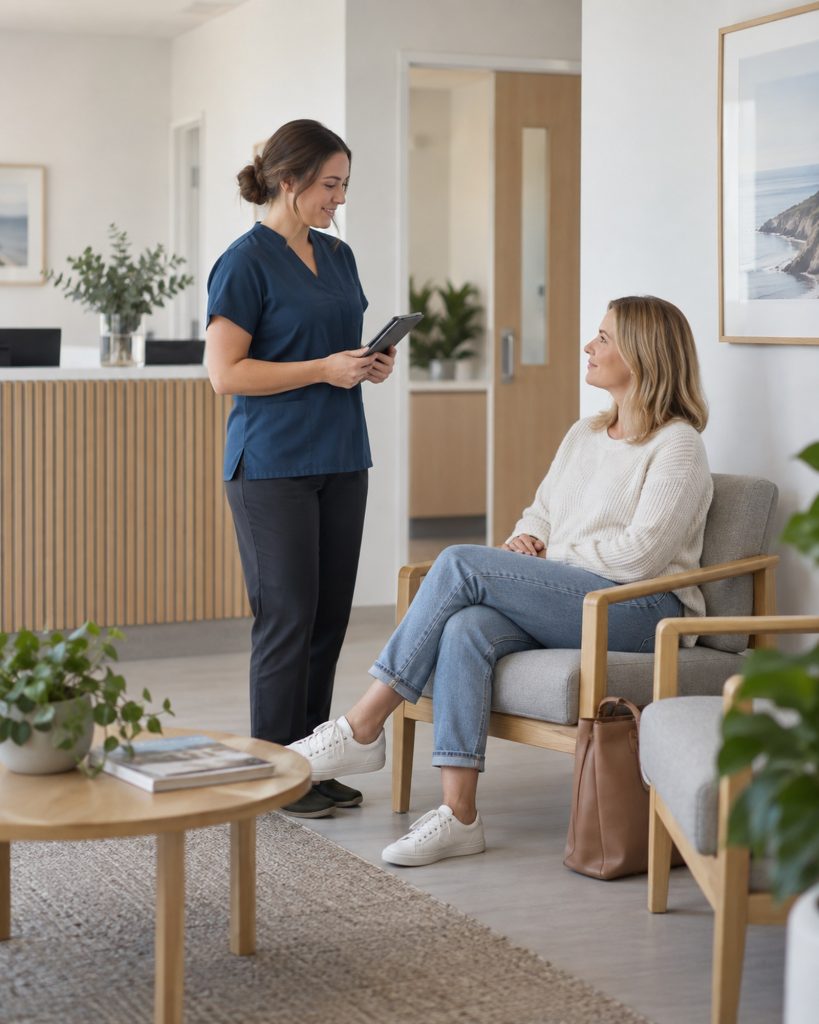
The spare chair often becomes informal storage. That may seem convenient until a patient arrives with a support person, family member or interpreter. Suddenly the room requires another seat or the belongings must be moved while the conversation begins.
Test the planned arrangement with the actual number of people expected. Give each person an intentional position, then add the everyday items they may bring. A room that looks spacious when empty can feel different once chairs are occupied and bags are present.
The design should not assume the companion will hold everything. Nor should a bag placement narrow the route through the room. Consider the patient and companion together while keeping the patient central to the conversation and to decisions about their own belongings.
Follow how the patient moves
In some appointments, the patient moves from a discussion position to another location in the room. That transition can leave a bag behind a chair or a jacket across a surface needed by staff. Review the sequence with the clinical team rather than treating the first resting place as the whole answer.
Where belongings remain should be understandable to the patient and compatible with the clinical task. If a practice requires items to be stored differently for a particular appointment, the relevant clinical procedures and specialist advice must shape the design.
This is especially relevant when translating a general concept into a specialised setting. An ordinary consultation-room illustration is not a specification for a radiology room or any equipment environment. Suitability needs to be established for the actual service, rather than inferred from the image.
Choose a detail that staff can maintain
A patient shelf becomes part of the room’s daily reset. Its material, fixing and relationship to adjacent furniture need to be considered alongside the practice’s cleaning requirements and the manufacturer’s information. The design team should make those decisions visible before procurement.
A narrow recess may look neat but be awkward to inspect. A deep cupboard may make forgotten items less obvious. A loose basket may migrate into the circulation path. Each option creates a different routine for staff and should be evaluated against that routine.
Quality in this detail means more than a pleasing finish. It includes whether the intended item fits, whether the installation is suitable and whether the team can keep the place ready for the next person without adding an unreasonable task between appointments.
Test with ordinary objects and real viewpoints
Bring a typical bag, jacket and document folder to a furniture review. Use clean demonstration items, with no personal records. Place them where the design expects them to go and sit in the proposed patient chair.
Can the person see the items? Is the resting place usable without an awkward reach? Does collecting the bag interrupt another person’s route? Repeat the exercise with the companion chair occupied and with different access needs represented appropriately.
A mock-up is a conversation aid, not a compliance assessment. Ask the project team to resolve applicable requirements and use feedback from patients and staff to refine the detail. The most useful result may be a changed position rather than a larger piece of joinery.
Make the last glance easy
The appointment is not quite over when the clinical discussion ends. The patient still needs to gather what they brought and leave without feeling hurried. An obvious belongings position can help staff offer a simple reminder at the right moment.
Discuss how the practice handles anything left behind, and keep that operating process separate from the furniture decision. A shelf is not secure storage and should not be described as such unless the actual system supports that claim. The same care applies to promises about theft prevention or infection control.
Before approving the room layout, follow one person’s belongings from entry to departure. The exercise connects a quiet joinery decision to patient dignity, a companion’s place and the work of resetting the room. A healthcare space feels considered when everyday details have somewhere to belong, leaving the conversation more room to focus on care.