For many years, clinic design was treated as a finishing touch — something to consider once the clinical requirements were met and the equipment was installed. As long as the space was clean, compliant and functional, design was often seen as secondary.
That mindset has changed.
Today, clinic design is no longer just about how a space looks. It is a strategic business decision that directly affects patient trust, staff wellbeing, operational efficiency and long-term costs. For modern healthcare practices, the physical environment is part of the service you provide.
And importantly, a well-designed clinic does not need to feel luxurious to be premium.
The Shift: From “Fit-for-Purpose” to Fit-for-Business
Healthcare has evolved. Patients are more informed, expectations are higher, and competition between practices has increased — particularly in metropolitan areas across Victoria.
At the same time, practice owners are under pressure from:
- Rising operational costs
- Staffing shortages and burnout
- Increased compliance requirements
- The need to differentiate their practice
In this environment, clinic design plays a much larger role than many realise.
The layout of a space affects how efficiently clinicians can work. The look and feel of the environment shapes patient perception before a word is spoken. The quality of materials and finishes influences maintenance, durability and lifecycle costs.
Design decisions made early can either support the growth of a practice — or quietly hold it back.


Design as a Signal of Trust and Professionalism
For patients, the physical environment of a clinic sends a powerful message.
Before interacting with a practitioner, patients subconsciously assess:
- Is this place professional?
- Is it well cared for?
- Does it feel calm, organised and trustworthy?
A thoughtfully designed clinic helps build confidence and reassurance, particularly in healthcare settings where anxiety is common.
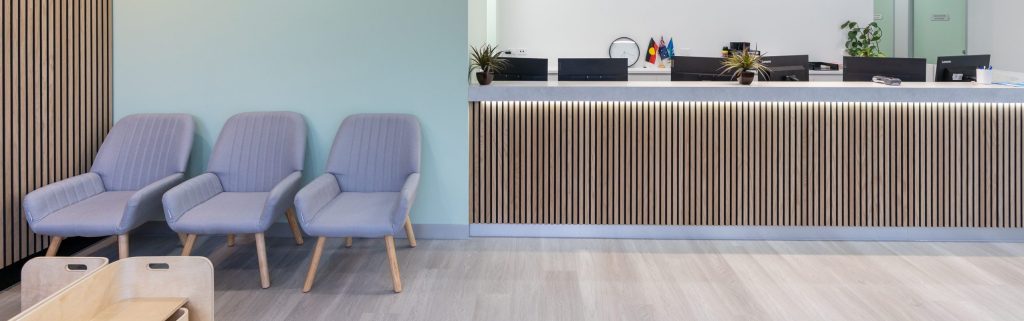
This doesn’t require marble benchtops or high-end finishes. Premium design is not about excess — it’s about intentionality. Clean lines, considered lighting, intuitive wayfinding and a cohesive aesthetic all contribute to a sense of quality and competence.
When design is done well, patients feel they are in capable hands.
Supporting Staff Performance and Wellbeing
Clinic design isn’t just for patients — it has a direct impact on the people who work there every day.
Poor layouts, cramped workspaces and poorly considered staff areas can lead to:
- Inefficient workflows
- Physical fatigue
- Increased stress
- Reduced job satisfaction
In contrast, well-planned clinical environments support staff by:
- Reducing unnecessary movement and bottlenecks
- Improving visibility and communication
- Providing appropriate separation between clinical, admin and patient zones
- Creating spaces where staff can decompress and recharge
In a time when retaining skilled healthcare professionals is a major challenge, the design of your clinic can be a quiet but powerful contributor to staff satisfaction and longevity.
Premium Doesn’t Mean Luxury
One of the biggest misconceptions in clinic design is the idea that “premium” automatically means “luxury.”
In reality, premium design is about quality of thought, not price tags.
A premium clinical environment is one where:
- Every layout decision supports workflow and patient care
- Materials are selected for durability, hygiene and longevity
- Spaces are designed to adapt as the practice grows
- Sustainability is considered to reduce long-term operating costs
- The overall aesthetic is calm, cohesive and purposeful
You don’t need gold accents or designer furniture. What matters is that the environment feels considered, professional and built to last.
Just as you wouldn’t compromise on clinical standards, the physical space should reflect the same level of care and attention.
Long-Term Value Over Short-Term Savings
Clinic design choices made purely to reduce upfront costs often lead to higher expenses over time.
Common examples include:
- Layouts that require future reconfiguration as services expand
- Finishes that wear quickly and need replacement
- Poor acoustic or lighting decisions that affect comfort and productivity
- Energy-inefficient systems that increase running costs
When design is approached as a business decision, the focus shifts to long-term value rather than short-term savings.
Investing in a well-designed fitout can:
- Reduce the need for future renovations
- Lower maintenance and energy costs
- Improve patient retention and referrals
- Support staff efficiency and morale
Over the lifespan of a clinic, these factors can have a significant financial impact.
The Clinic as an Extension of Your Brand
Whether you realise it or not, your clinic environment is part of your brand.
It reflects your values, your standards and the level of care patients can expect. A cohesive, well-designed space reinforces your positioning — whether that’s family-focused, specialist, community-based or innovative.
Inconsistent or poorly designed environments can dilute that message.
When design, functionality and aesthetics are aligned, the clinic becomes a silent ambassador for your practice.

Raising the Standard of Clinical Environments
At its core, modern clinic design is about respect — for patients, for staff and for the work being done within the space.
Clinical environments deserve the same level of design thinking, quality and finish as any premium build. Not because they need to be extravagant, but because healthcare is important, demanding and deeply human work.
When every design decision is made with intention — considering how people move, feel and interact within the space — the result is a clinic that functions better, feels better and performs better as a business.