Psychology clinic planning often starts with a simple calculation: how many consult rooms can fit within the tenancy?
That calculation matters, but it can push the working layer of the practice into whatever area remains. Notes are completed in consult rooms, confidential calls happen in corridors, supplies accumulate in spare cupboards and lunch is eaten at an administration desk.
The time between appointments is still part of clinical work. Practitioners may need to document a session, review material, consult a colleague, return a call or simply pause before welcoming the next client. A thoughtful fitout gives those activities appropriate places without making the clinic unnecessarily large.
Map What Happens Between Appointments
Start by documenting the gap between one client leaving and the next arriving. Does the practitioner write notes immediately? Are records digital, physical or mixed? Is peer consultation common? Are confidential calls returned during the day? Which resources move in and out of consult rooms? How long are appointment changeovers?
The answers reveal where work is currently happening and where it should happen. They also help distinguish activities that can share space from those requiring privacy or quiet.
Provide a Practical Place for Notes
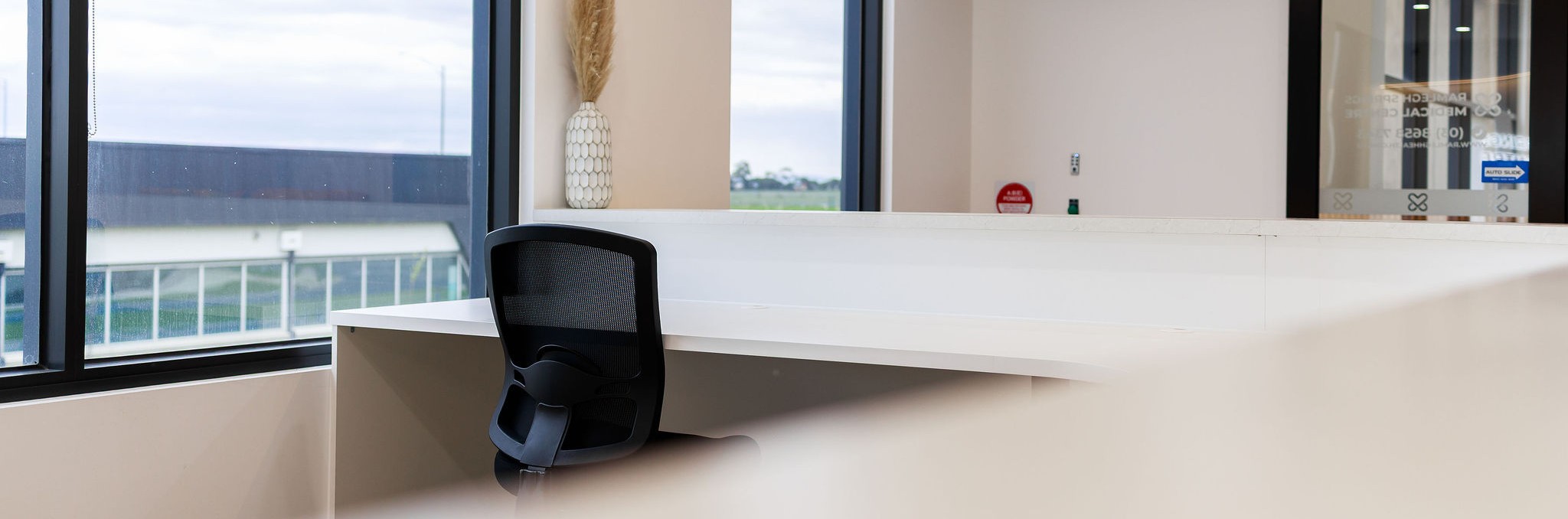
Some practitioners prefer to document within the consult room. Others need the room available for another clinician or benefit from a change of setting. A compact staff-only workpoint can support short documentation tasks without placing computers and records in public view.
The workpoint needs more than a narrow bench. Consider screen privacy, comfortable posture, power and data, task lighting and the movement of other staff. If multiple people use it simultaneously, acoustic separation and desk spacing become important. A workstation in a busy passage may technically fit but remain difficult to use.
Case Discussion Needs Discretion
Informal peer support can be an important part of practice life, but a reception back desk or staff kitchenette may not be appropriate for every conversation. Where case discussion, supervision or team review occurs regularly, identify a room or enclosed setting that supports it.
This may be a small meeting room, an adaptable group room or a staff room with a door and suitable acoustic treatment. The right answer depends on practice size and operating model. The principle is to avoid confidential or sensitive discussion spilling into circulation and client-facing areas.
Reset Space Protects the Rhythm of the Day
Practitioners move from one person’s experience to the next, often with limited time between sessions. A reset area does not need to be a large lounge. It needs to give staff a genuine change from the consult environment.
Natural light, access to water, a comfortable seat and separation from reception activity can make a compact space useful. It should not double as the primary storage room or printer zone if those activities prevent rest. Even a few quiet minutes can be harder to achieve when the only staff space is also a thoroughfare.
Planning this area is not about adding luxury. It is about recognising the sustained attention involved in psychology work and supporting a dependable working day.
Storage Should Follow the Work
Psychology practices may hold assessment tools, therapy resources, stationery, children’s materials, archived records and general supplies. If everything is placed in one distant cupboard, staff repeatedly cross the clinic or leave items in consult rooms.
Separate frequently used resources from longer-term storage. Locate everyday materials near the rooms that use them. Use closed storage to reduce visual clutter and identify items that require secure access. Printer supplies and administrative materials can sit near the back-office hub, while selected therapy resources may be distributed across consult rooms or a central staff-only store.
Storage quantities should reflect actual operations and record-keeping practices. Project-specific privacy, records and regulatory requirements need confirmation with the practice and relevant advisers.
Keep Administration Out of the Client Journey
Calls, deliveries, printing, team coordination and records management create sound and movement. When the administrative hub is placed directly behind an open reception desk, clients may see screens, hear conversations or feel the working pressure of the practice.
A clear back-office zone can separate these activities while maintaining an efficient connection to reception. Staff should be able to move between workpoints, storage, amenities and consult rooms without repeatedly crossing the waiting area. Doors, screens and joinery can control views and sound, but the underlying zoning does most of the work.
Give Support Space the Same Design Attention
Back-of-house areas are often reduced late in a project to protect revenue-generating rooms. Over-compression can create a false economy if it leaves staff working in corridors, consult rooms carrying excess storage or reception absorbing every operational task.
The answer is not automatically more floor area. It is better allocation. A shared room can serve compatible functions. Joinery can use height effectively. An adaptable room can support meetings at one time and supervision at another. The plan should protect the activities that genuinely require enclosure, quiet or secure access.
A Calm Clinic Depends on Its Working Layer
Clients experience a calmer front-of-house when the work behind it has somewhere to go. Practitioners can move through the day with less friction when notes, calls, discussion, resources and reset are not competing for the same corner.
Before finalising the room schedule, map both journeys: the client’s path through the appointment and the practitioner’s path through the working day. The strongest psychology clinics support both. They provide an appropriate setting for care while giving the people delivering it the practical infrastructure to stay focused, organised and present.