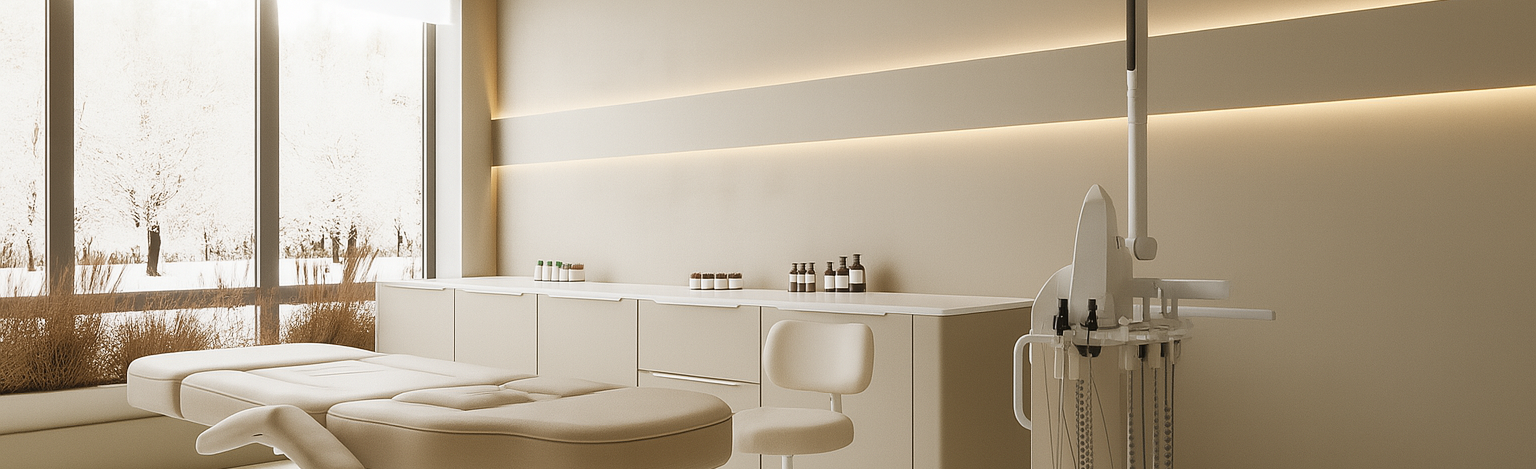
Dermatology clinics are some of the most technically demanding healthcare environments to design and build. Unlike standard medical consulting spaces, they often combine consult rooms, procedure areas, and high-spec treatment rooms housing advanced laser and energy-based devices.
Each of these spaces has different technical, compliance, and operational requirements and if they’re not considered early in the fitout process, it can lead to costly redesigns, workflow inefficiencies, or equipment limitations down the track.
At our core, we specialise in delivering medical fitouts that support both clinical performance and patient experience. Dermatology clinics in particular benefit from a highly coordinated design-and-construction approach, where infrastructure decisions are made in tandem with clinical requirements.
Below are the key considerations that make the biggest difference when planning a dermatology clinic fitout.
Specialised Infrastructure for Laser and Treatment Rooms
Laser and light-based treatments are central to many modern dermatology practices, and these rooms require more than a standard clinical setup.
Key planning considerations include:
- Dedicated room layouts that support safe operator positioning and patient comfort
- Appropriate wall and surface finishes that reduce reflectivity and enhance safety
- Controlled access points to maintain treatment integrity during procedures
- Spatial separation between high-energy treatment areas and quieter consult zones
The goal is to create rooms that are not only functional for clinicians, but also calm and reassuring for patients undergoing cosmetic or medical procedures.
Electrical Load, Shielding, and Equipment Safety
Dermatology equipment (particularly laser systems and advanced aesthetic devices) places specific demands on electrical infrastructure.
Early-stage planning should account for:
- Increased electrical load capacity per treatment room
- Dedicated circuits for high-demand equipment
- Surge protection and stable power supply systems
- Compliance with manufacturer installation requirements
In some cases, shielding or specialised installation conditions may also be required depending on the equipment type.
Getting this right from the outset helps avoid operational disruptions and ensures equipment performs at its intended specification.
Ventilation and Temperature Control in Procedural Spaces
Comfort and air quality are critical in dermatology treatment rooms, especially where procedures involve heat, light, or extended patient contact.
Effective HVAC design supports:
- Stable room temperatures for both patients and equipment performance
- Adequate air exchange rates to maintain clinical comfort
- Odour and particulate management during procedures
- Zoned climate control between consult, waiting, and treatment areas
Well-designed environmental systems also contribute to a more premium patient experience, an important factor in cosmetic dermatology settings.
Infection Control and Surface Selection
As with all medical environments, infection prevention is a core requirement, but dermatology clinics have added complexity due to the variety of treatments performed.
Fitout decisions should prioritise:
- Seamless, non-porous surfaces that are easy to clean and disinfect
- Durable finishes that can withstand repeated clinical cleaning protocols
- Minimised joints and crevices where contaminants could accumulate
- Hand hygiene accessibility throughout treatment zones
Material selection plays a major role here not just for compliance, but for long-term durability and clinical confidence.
Future-Proofing for Emerging Skin Technologies
The dermatology sector is evolving quickly, with new laser systems, skin imaging technologies, and AI-assisted diagnostics becoming increasingly common.
A well-planned fitout should anticipate change, not just current requirements.
This can include:
- Flexible room layouts that can adapt to new equipment
- Oversized conduits and service pathways for future cabling
- Additional electrical capacity built into infrastructure planning
- Modular design elements that allow for upgrades without major demolition
Future-proofing ensures clinics can evolve their services without needing disruptive or expensive rebuilds every few years.
Fitting Out A Successful Dermatology Clinic
A successful dermatology clinic fitout is about much more than aesthetics. It’s about creating a technically robust environment that supports advanced treatments, enhances patient comfort, and allows clinicians to operate efficiently and safely.
When infrastructure, compliance, and clinical workflow are considered together from the beginning, the result is a space that performs as well as it looks, both now and into the future.
If you’re planning a new dermatology clinic or upgrading an existing space, early collaboration between builder, designer, and clinical team is what ultimately determines how well the space will function long-term.