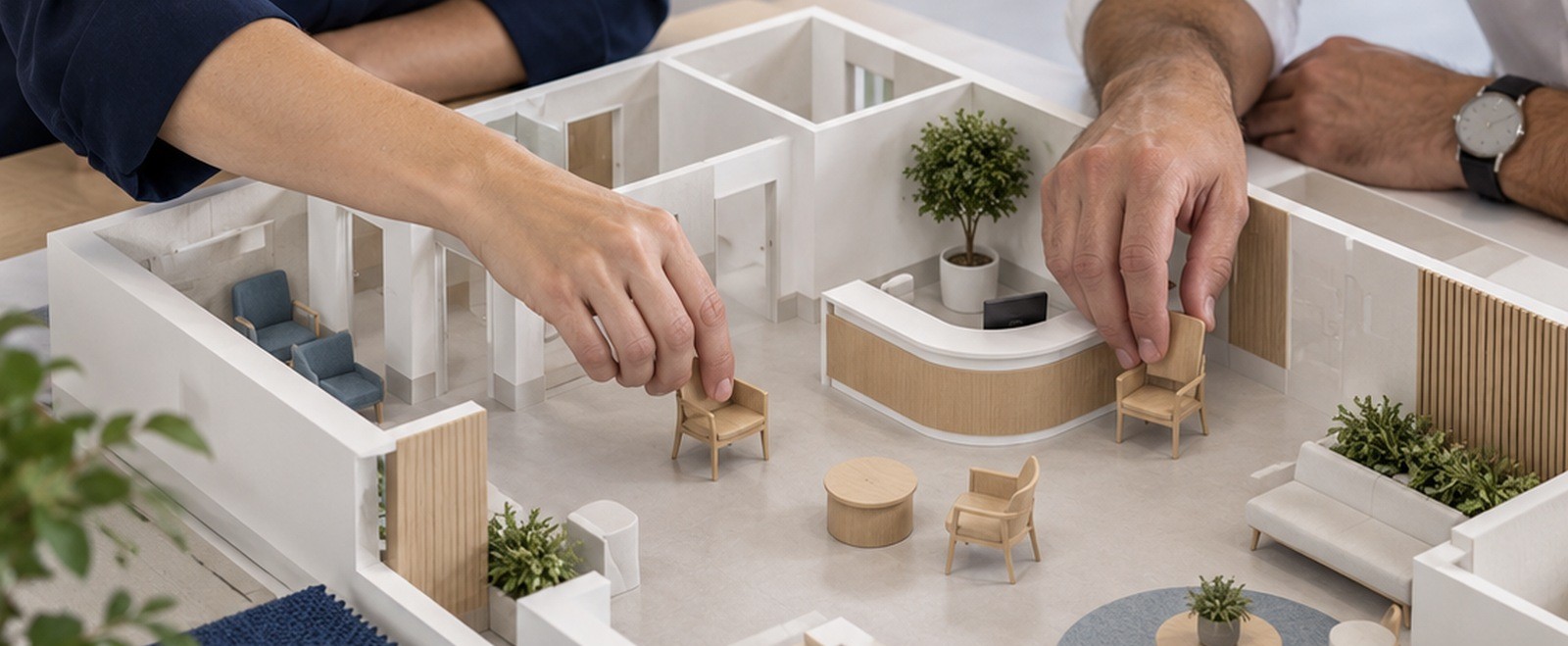
The waiting-room chairs selected during design are no longer available. A replacement looks similar in the supplier’s photograph and comes in the right blue. It is approved as a finish change. Only after delivery does the team notice that its arms project further into the route beside the seats.
This imagined radiology fitout problem begins with a reasonable substitution. Products change, lead times move and alternatives need to be considered. The important question is whether the replacement preserves the job the original item was doing within the patient journey.
A chair, table or screen belongs to an arrangement of people and activities. Reviewing it only by colour and price can miss the effect on the person arriving, the staff member approaching a waiting patient or someone moving through the lounge. A modest substitution review can keep those relationships visible.
Preserve the reason behind the selection
Before comparing alternatives, identify why the original item was chosen. Was its footprint important to a particular seating arrangement? Did the back height preserve a view towards staff? Did the table position allow an ordinary pause without occupying the movement route?
Not every reason will be obvious from a product schedule. Ask the designer and operator to describe the intended function in plain language. Where performance, durability, cleaning or accessibility requirements informed the selection, retain the relevant specification and adviser input rather than replacing it with a general impression of similarity.
This creates a useful basis for review. The alternative can be assessed against the purpose of the item and the verified project requirements. A visually close match may still need a different layout, while a different-looking option may be worth investigating if it supports the agreed function.
Compare the whole physical shape
The seat width shown in a product description does not necessarily describe the space the complete chair occupies. Arms, legs and the angle of the back can change its overall footprint. Tables may have broad bases or projecting tops that are easy to miss in a front-facing image.
Obtain the relevant product information and place the proposed item at its actual dimensions on the current furniture plan. Confirm which measurements the supplier has provided rather than assuming that similarly named dimensions mean the same thing. Where the information is unclear, keep the selection open until it is resolved.
The purpose is not to prescribe a universal furniture size. It is to understand the actual object being introduced into this particular room. The design team and relevant advisers should check its relationship with circulation, doors and applicable project requirements before treating the substitution as complete.
Follow the patient route past the replacement
Choose the part of the patient journey that passes the item. In a hypothetical waiting lounge, a staff member approaches a patient from the side. A replacement chair with a deeper back moves that approach closer to a side table. The issue is the relationship between the pieces, not simply whether the chair fits within the room.
Trace the movement using the updated plan and, where useful, a sample or a simple full-size arrangement in an appropriate review space. Include the operator’s intended way of assisting people and any relevant access advice. Avoid presenting an informal demonstration as proof of compliance.
Review nearby activities as well. A different table may affect where someone puts a bag while standing, or where a companion sits during a wait. These observations help the team identify what needs checking. They do not justify assuming how every patient will move or what assistance a person requires.
Check what people can see
A replacement screen may be taller than the original, even if its width appears similar. A new chair style may raise the line of seat backs. Such changes can alter the view between waiting patients and the staff position used to make contact.
Look at the arrangement from the seats rather than relying only on a standing inspection. Ask whether the intended staff approach remains understandable under the practice’s communication process. A sightline that mattered during design should remain part of the substitution discussion.
This does not mean every interior should be completely open. Privacy and visibility can serve different needs in different places. The operator and designer should decide which relationship the original arrangement was meant to support, then assess the proposed change against that purpose.
Carry maintenance requirements into the decision
An alternative finish may look suitable while requiring a different care process. Ask the supplier for the relevant information and review it with the practice team responsible for cleaning and maintenance. Keep any required performance assessment with the people qualified to make it.
Consider how the item will be moved, maintained or replaced during normal use. A heavy table or a different base arrangement may affect routine tasks even when it occupies a similar area. Those tasks belong in the review alongside patient movement and visual consistency.
Long-term quality comes from matching the selection to the work it needs to do. Avoid promising a lifespan, hygiene outcome or maintenance saving without evidence. The practical goal is an informed choice whose care requirements and functional implications are understood before purchase.
Close the change with a clear record
Keep a brief substitution record with the product schedule. Name the original item, the proposed replacement and the reason for the change. Attach the information used to compare them, note the affected part of the patient route and identify who must review any unresolved question.
Record the decision and update the furniture plan if the arrangement changes. A supplier email approving a colour is not necessarily approval of a revised layout. Make the scope of each approval clear so purchasing, design and the practice are working from the same decision.
After installation, check the delivered items against the approved selection and arrangement through the project’s agreed review process. If an item differs, refer it back rather than quietly adjusting adjacent furniture and assuming the intended route has been preserved.
At the next proposed furniture substitution, ask for one sentence explaining the original item’s job in the patient journey. Carry that sentence into the comparison. It keeps a small purchasing decision connected to the people using the space and helps the completed fitout retain the practical intent developed during design.