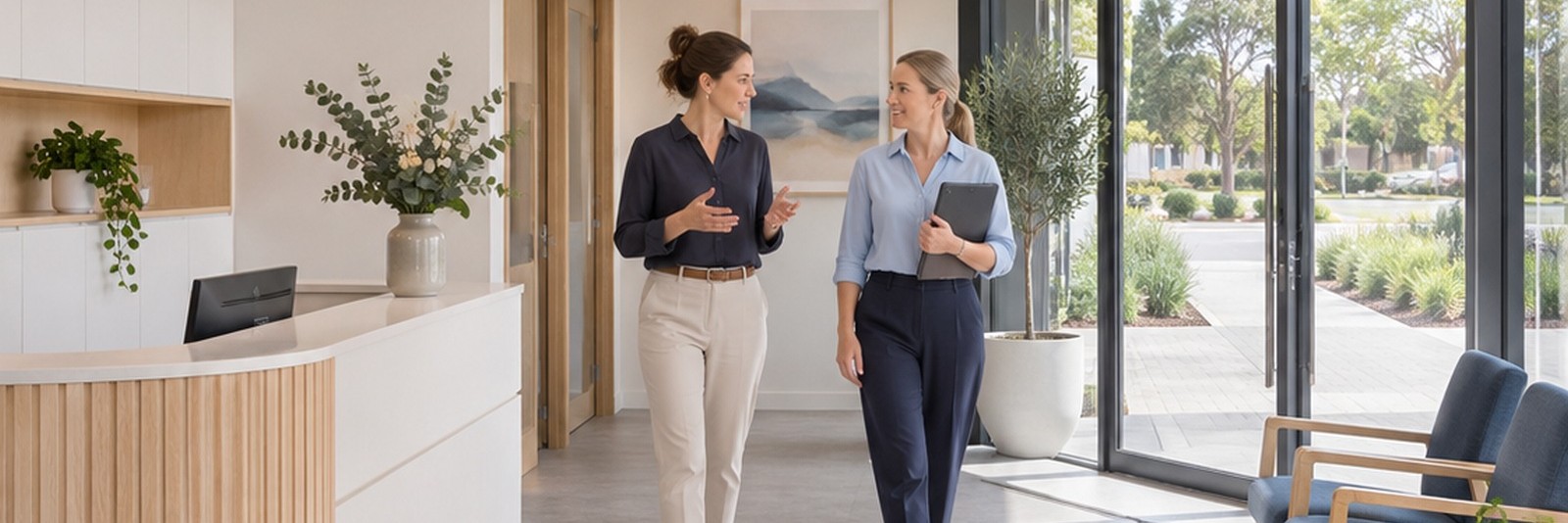
A reception refurbishment can begin with a reassuring phrase: the desk will move for a few weeks. On a floor plan, that may look like a modest change. For the practice team, it can relocate the point where patients ask for help, staff manage arrivals and private information enters the working day.
The temporary desk deserves a brief of its own. Its location, furniture and supporting arrangements need to be considered against the work reception actually does. A spare table in an available corner is a starting idea, not evidence that the temporary arrangement will support the practice.
Before construction dates are confirmed, bring the reception team into the discussion. They can explain the ordinary interactions that a drawing may miss. The aim is to make the proposed change understandable and workable, with unresolved requirements referred to the people responsible for assessing them.
Describe the activities that move with the desk
Start with an ordinary arrival rather than a furniture list. A patient enters, looks for the right person, explains why they are there and waits for the next instruction. Meanwhile, a receptionist may be answering a call, checking a booking or speaking with a colleague. These activities need a place even when the usual reception counter is unavailable.
Ask staff which tasks happen together and which need separation. Distinguish brief public enquiries from conversations that need more privacy. Consider where personal belongings, paperwork and everyday supplies go. This is a description of the work, not a request to reproduce the permanent reception in miniature.
For a hypothetical specialist practice, the temporary desk might handle arrival and directions while longer administrative conversations move to a separately agreed location. That arrangement needs an actual location and a clear way for staff to use it. Writing “privacy managed by staff” leaves the practical problem unresolved.
Test the approach from the patient’s perspective
Stand at the point where a person first enters the proposed arrangement. Can they identify where to ask for help? Is someone visible, or does the temporary desk face away from the approach? What happens when another patient is already speaking with the receptionist?
Follow the route through arrival, waiting and the next staff interaction. Include a person who uses a mobility aid or attends with a support person in the planning discussion. Their needs should inform the brief and any required professional assessment. A walkthrough does not establish access compliance, but it can reveal questions that deserve a proper answer.
Keep the test specific to the temporary period. An attractive final reception rendering cannot explain how people will find the practice next Tuesday. The temporary experience needs its own current plan, communication and review.
Give the staff side equal attention
A reception desk also has a working side. Look at the relationship between seating, storage, the phone and the tasks that require a screen. Staff should be able to explain how they will carry out the proposed work without relying on a constant series of improvised arrangements.
Confirm who will assess and arrange the services the temporary workstation needs. Do not assume that a nearby outlet or an available wireless connection establishes suitability. Keep technical questions with the responsible providers, and record when the arrangement must be checked before staff depend on it.
Furniture selection follows this activity brief. A table that fits the floor area may provide little useful storage or create an awkward working relationship with the waiting seats. Review the actual selected items and their placement, rather than approving a generic desk symbol and discovering the differences on moving day.
Coordinate the message before changing the space
A temporary reception can be physically prepared while patients are still receiving old directions. Review the information people encounter before arrival and at the building. Decide which appointment messages, website notices and on-site directions need updating for this particular change.
Use one approved description of the temporary arrangement. Give it an owner and an effective date. If an opening time, entrance or assistance arrangement has not been confirmed, resolve it before inserting it into patient communications. The reception team should know which version is current and how to report an inconsistency.
Keep messages practical and proportionate. People need to know what to do and where to seek help. They do not need the construction team’s internal terminology. Clear communication supports trust because the information given before a visit matches the experience on arrival.
Rehearse the changeover as a working sequence
The move itself needs more detail than a date beside “reception relocation.” Identify what must be prepared before the desk moves, who transfers the working materials and when staff can check the arrangement. Consider how the practice will respond if the planned setup is not available when expected.
Walk through a fictional first arrival with the staff who will use the desk. Test where a conversation happens, how a colleague is contacted and where the next patient waits. Keep real patient details out of rehearsal materials. Note anything that depends on an unconfirmed service or an unfinished decision.
This exercise is an operational review. The project team and appropriate advisers still need to determine whether the proposed construction and clinical arrangements can proceed. A successful rehearsal does not authorise continued care beside building work or replace the approvals the actual project requires.
Keep a temporary reception brief that staff can use
A useful brief can stay short. Describe the activities handled at the temporary desk, the agreed location for other conversations, the selected furniture, the providers responsible for setup and the patient information that changes. Add the start condition, the person who confirms it and the review date.
During the temporary period, invite staff to record recurring difficulties rather than quietly absorb them. Perhaps storage is in the wrong place, or patients repeatedly approach an unattended counter. Share those observations with the responsible team before changing the arrangement. Small adjustments can affect other parts of the temporary plan.
Thoughtful healthcare design includes the spaces people use between the old clinic and the finished one. Giving temporary reception a clear brief respects the patient’s need for direction and the receptionist’s need for a practical place to work. Before the desk moves, ask the team to demonstrate one complete arrival in the proposed setup. The questions that emerge are useful design information.